


Configuring, Calculating, and Automatically Engineering Components
Standard components with customer-specific adaptations: configurators and CAD automation transform millions of variants into a manageable, online-accessible product range.
© GEMÜ Gebr. Müller Apparatebau GmbH & Co. KG
The Dilemma Facing Component Manufacturers
Millions of variants, rising self-service expectations, and uneconomical custom designs – without automation, an unsolvable conflict:
An Extreme Range of Variants
Component manufacturers offer thousands of base products, each available in dozens of dimensions, materials, coatings, and connection sizes. The combinatorial diversity easily reaches millions of theoretical variants – a challenge for catalogs, configuration, and engineering alike that cannot be scaled using conventional methods.
Expectation of Online Self-Service
Customers and distribution partners increasingly expect to be able to configure components online themselves – with real-time 3D previews, instant price calculation, and CAD downloads. Companies without such self-service offerings lose orders to competitors with better digital availability, particularly for near-standard products.

© GEMÜ Gebr. Müller Apparatebau GmbH & Co. KG

© GEMÜ Gebr. Müller Apparatebau GmbH & Co. KG
Uneconomical Custom Designs
Customer-specific adaptations beyond the standard range currently require manual engineering. With low unit quantities and tight margins, the engineering effort for custom requests often exceeds the margin achieved – orders are either turned down or processed unprofitably. Every non-automated special variant costs money.
Fragmented Product Data
Catalog data, CAD models, price lists, and technical data sheets are maintained in separate systems. Changes to a product must be replicated across multiple locations – resulting in outdated catalogs, incorrect prices on the website, and inconsistent CAD models that erode customer trust.
Use Cases: How Component Manufacturers Benefit in Practice
Three typical scenarios showing how we automate online configuration, custom engineering, and web shop integration:

Online Configuration of Hydraulic Cylinders
A hydraulics manufacturer offers a configurator on its website where customers can select stroke, bore diameter, mountings, and sealing materials. A 3D model of the configured variant is displayed in real time, the price is calculated, and a STEP download is provided. More than 90% of inquiries are handled entirely via self-service – without any sales contact or engineering follow-up.

Automated Custom Engineering of Fasteners and Connectors
When a customer requires a special dimension or a specific material combination that falls outside the standard range, Design Automation generates the engineering model on a rule-based basis – including the manufacturing drawing and bill of materials. What previously required two days of engineering work is completed and validated within minutes. The boundary between “standard” and “custom” disappears.

Web Shop Integration with Live 3D and Instant Quotation
The component configurator is seamlessly integrated into the existing web shop. Customers configure their component, view the 3D preview, receive the price, and can place an order directly. Integration solutions transfer the order data to production control and the ERP system – the entire process is digitalized end-to-end, from the first click to the manufacturing order.
End-to-End Automated: Measurable Results.
Connect all relevant systems into a seamless process chain – without data silos, without system breaks – and benefit from shorter throughput times, fewer errors, and greater data consistency across IT systems.
<20 min
from customer requirement to fully configured 3D model
90 %
self-service rate in the online configurator
≥ 40 %
fewer custom designs through broader configuration coverage
Software for Component Manufacturers
Our software and solutions for online configuration, automated engineering, and seamless web shop integration:
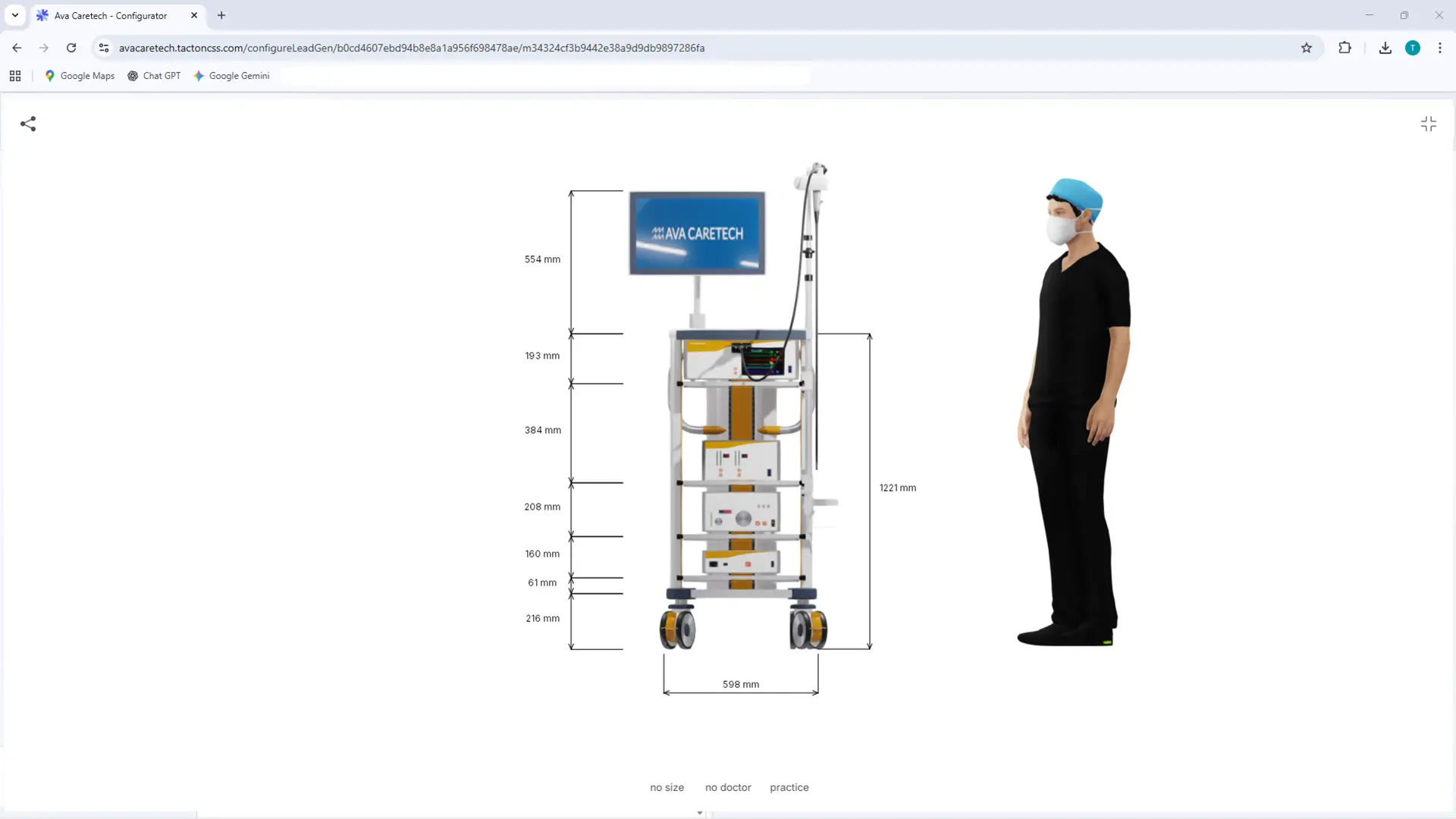
Tacton CPQ
The constraint-based engine intuitively guides users to a technically sound solution. It significantly speeds up the quote generation process and ensures maximum price transparency through automated real-time calculations for the sales team.
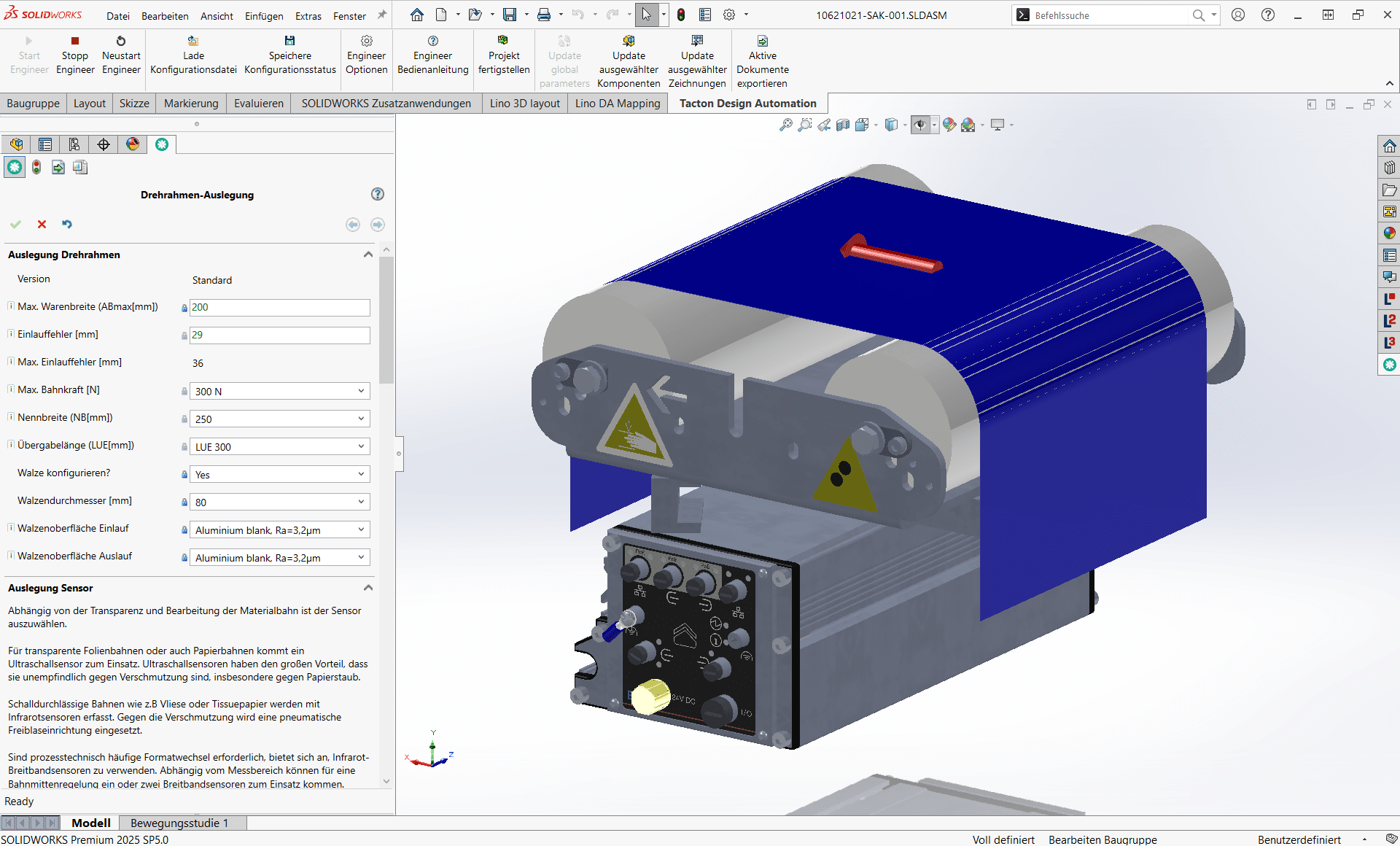
Tacton Design Automation
Transforms expert knowledge into intelligent rules to automatically generate complex 3D models, drawings, and bill of materials—saving up to 90% of engineering time.
Cosling® Configurator
A configuration engine designed to handle complex product logic. Processes technical and business rules for configuring complex products.

Lino® Hub
Seamlessly connects sales, engineering, and manufacturing for end-to-end digital processes.
Seamlessly integrates CPQ, CAD, ERP, and PDM for error-free, automated data flows without media breaks.
Lino® Automate
Transforms routine CAD tasks into fully automated workflows using intelligent action lists and seamlessly integrates them with PDM, PLM, or ERP systems—for maximum time savings.
Relevant Processes
The digital engineering processes supported by Lino connect system integration, configuration, and automation into a seamless value chain – from the first customer contact through to the finished machine system.
Design Automation for Rapid Product Development
Optimize your design process with Design Automation and CAD automation. Product rules automatically generate 3D CAD models, 2D drawings, and bills of materials. This accelerates engineering processes, reduces errors, and significantly decreases routine engineering tasks.
Product Configuration for Individual Customer Solutions
Master product variety with a product configurator and CPQ system. Using rule-based variant configuration and guided selling, sales teams, partners, and customers create technically valid product variants, quotes, and configuration data – directly integrated into CAD and ERP systems.
System Integration for a Seamless Corporate IT Landscape
Connect your IT systems into a continuous data chain. Through system integration in mechanical engineering, CAD, ERP, CRM, and PDM/PLM systems are seamlessly linked. This creates a consistent digital thread along the entire product lifecycle.
Visualizing 3D Products in the Web Browser
With 3D product visualization on the web, you can present complex products interactively in the browser. Thanks to modern technologies such as WebGL 3D viewers, variants can be displayed in real time and directly linked to configurators or web shops.
Generating Technical Drawings Automatically
Create technical drawings automatically from 3D CAD models. Drawing automation generates standards-compliant manufacturing documentation, automatically adjusts layouts, and reduces manual rework after model changes.
Together, we analyze your existing workflows and identify concrete potential for more efficient, digital processes – practical, structured, and with a clear focus on measurable value.
- Analysis of your engineering and sales processes
- Identification of optimization potential
- Clear roadmap for your digital transformation
See for yourself

Frequently Asked Questions
The FAQs answer questions about the components industry in the context of the Lino portfolio.
Find answers about online configuration, automated custom engineering, and webshop integration for component manufacturers. Learn how Tacton CPQ, the Cosling Configurator, and Tacton Design Automation make millions of variants manageable, provide real-time 3D previews and CAD downloads in self-service, generate custom designs in minutes rather than days, and transfer product data seamlessly all the way into the ERP – for a self-service rate of over 90% and less than 20 minutes from customer request to finished 3D model.
Can the Lino AI Agent help component manufacturers with technical consultation in the self-service configurator?
Yes. The Lino AI Agent can be integrated into the online configurator to actively support customers in complex selection decisions – such as choosing the correct seal class for an aggressive medium, determining the appropriate pressure range, or interpreting standards and certifications. The AI Agent draws on stored product rules, technical data sheets, and historical configuration data. The result is context-aware, technically sound consultation quality in the self-service channel – without requiring manual intervention from a sales engineer.
How does Lino solve the problem of fragmented product data for component manufacturers with large variant portfolios?
Lino Hub creates a single, consistent data source from which catalog data, CAD models, price lists, and technical data sheets are automatically kept up to date. When a product is changed in the engineering database – for example, a new size is added or a material is updated – Lino Hub automatically propagates this change to all connected systems: online configurator, webshop, ERP, and product catalog. Outdated prices on the website, inconsistent CAD models at the customer’s site, and incorrect bills of materials in production become a thing of the past.
How does Lino Hub seamlessly integrate the component configurator with the webshop and ERP?
Lino Hub serves as the central integration platform between the online configurator, design automation, the webshop system, and the ERP. When a customer configures and orders a component in the webshop, Lino Hub automatically transfers the complete order data – configuration parameters, bill of materials, price, and delivery information – to the ERP and directly triggers the production order. Manual data transfers are completely eliminated, part numbers and prices are consistent across systems, and the entire process is end-to-end digitized from the first click in the webshop to the production order.
How does Tacton Design Automation automate custom engineering of components beyond the standard product range?
When a customer requires a non-standard dimension, a special material combination, or a connection geometry not available in the catalog, Tacton Design Automation generates the engineering model fully automatically based on stored product rules – including standards-compliant manufacturing drawings and a complete bill of materials. What previously required two to three days of manual engineering work is completed and validated in under 20 minutes. Component manufacturers report that broader configuration coverage eliminates at least 40% of previously required custom engineering, and the boundary between standard and custom products effectively disappears.
How does Lino provide a real-time 3D preview with CAD download in the online configurator for components?
Lino’s 3D web visualization connects the web-based configurator directly with Tacton Design Automation. With every change to a configuration parameter – such as stroke, diameter, or seal material for a hydraulic cylinder – the 3D model updates in real time in the customer’s browser. Once configuration is complete, the STEP download is immediately available, allowing the customer to integrate the component directly into their own design. This combination of live 3D preview and one-click CAD download is the decisive competitive advantage over suppliers without a self-service offering.
How can millions of component variants be made manageable through an online configurator?
Tacton CPQ and the Cosling Configurator translate the technical and commercial product logic of a component manufacturer – dimensions, materials, coatings, connection dimensions, pressure ratings, and certifications – into a constraint-based rule set. The system exclusively permits technically valid combinations and excludes impermissible variants by design. This makes even several million theoretical variants manageable within a clear, guided configuration process – for internal sales staff as well as customers and distributors in online self-service.
Configuring, calculating, and automatically engineering components is what Lino makes possible – reducing manual effort and ensuring precision across the entire product lifecycle.