


Configuring Food Processing Machinery –
Hygienic, Standards-Compliant, Safe, and Fast
Food Processing Machinery: Machines for the food industry must meet the highest hygiene and safety standards. Automated configuration ensures regulatory compliance from the very first quotation phase – and accelerates the entire sales process.
©Maschinenfabrik Seydelmann KG
Why Food Processing Machinery Is Particularly Demanding
Strict hygiene regulations, variable material specifications, and complex certification requirements make every configuration a regulatory test case:
Strict Hygiene Regulations as Engineering Constraints
EHEDG guidelines, FDA compliance, and customer-side audit requirements govern material selection, surface finishes, and design principles. Every machine variant must demonstrably meet these requirements – a time-intensive and error-prone task when done manually, concentrating expert knowledge in just a few people within the organization.
Variable Material Specifications per Product Contact Zone
Depending on the application zone – product-contact, splash-protected, or dry zone – different requirements apply for stainless steel grades, sealing materials, and coatings. Correct assignment demands in-depth specialist knowledge that is often held by only a small number of employees. A single mistake can compromise an entire production batch.

©Maschinenfabrik Seydelmann KG

©Maschinenfabrik Seydelmann KG
Frequent Custom Requests Under High Cost Pressure
Food manufacturers demand individual adaptations for dosing accuracy, cleanability, or rapid format changeovers – while simultaneously facing aggressive pricing pressure and short delivery times. Without efficient configuration options, custom quotes become uneconomical or take so long that a competitor wins the business first.
Complex Documentation and Certification Requirements
For every machine delivered, material certificates (3.1 inspection certificates), surface inspection records, EHEDG compliance evidence, and declarations of conformity must be compiled. This documentation burden ties up engineering resources throughout the entire order cycle and regularly delays delivery.
Use Cases: How Food Machinery Manufacturers Benefit in Practice
Three typical scenarios showing how our solutions automate hygiene requirements, configuration, and documentation:
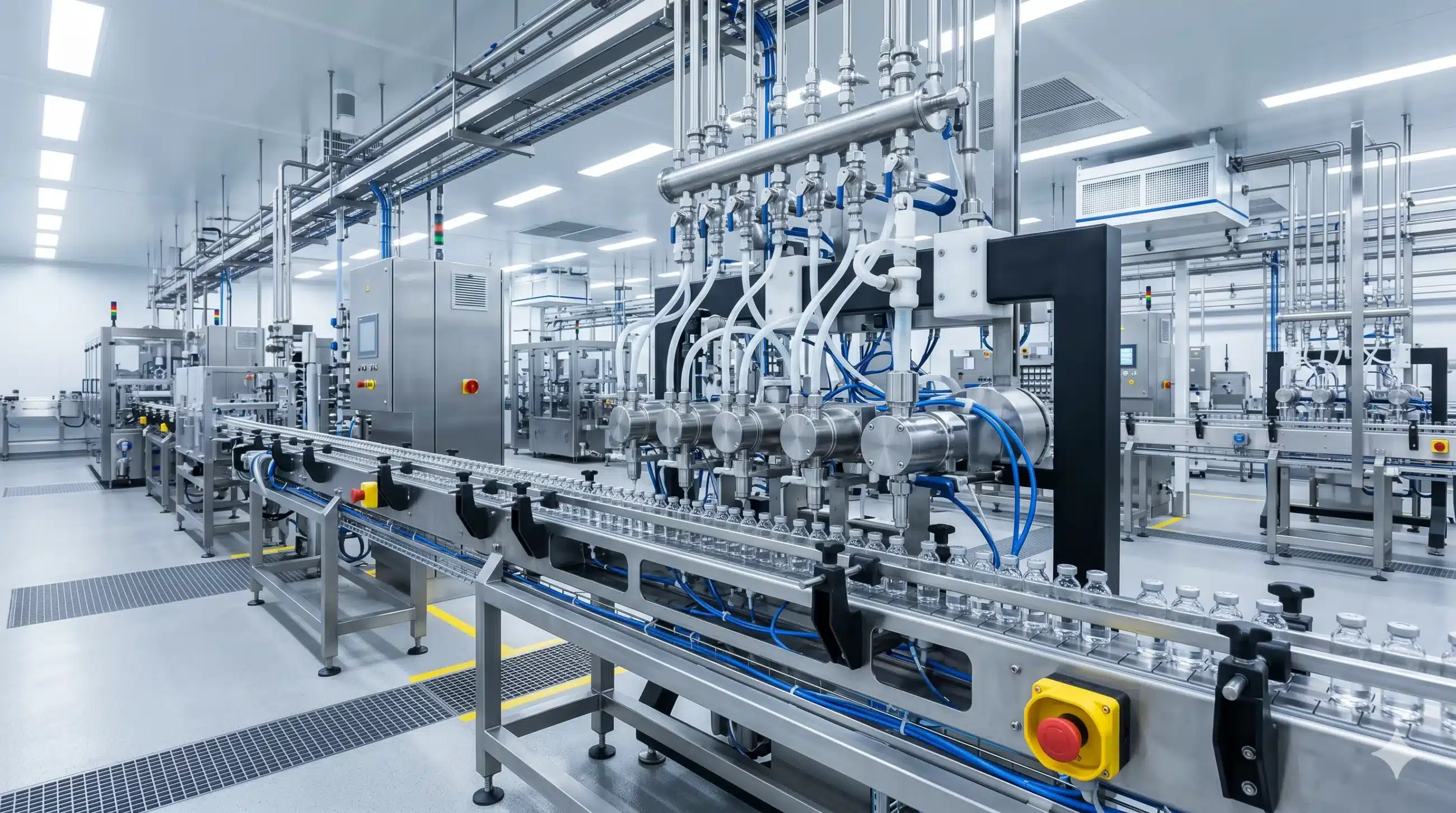
Filling and Dosing Systems with Hygienic Variants
A filling system manufacturer uses its CPQ system to configure the machine by fill medium, viscosity, fill volume, and hygiene requirement. The system automatically suggests the correct stainless steel grade, sealing class, and surface finish based on the applicable hygiene zone. Design Automation then generates an EHEDG-compliant 3D model that demonstrably fulfills all design hygiene rules. Documentation effort is drastically reduced because certificates are assigned automatically.

Drawing Generation with Surface and Cleaning Specifications
For every configured machine, manufacturing drawings are generated automatically that include not only geometric dimensions but also surface specifications (Ra values), cleaning zones, and weld seam specifications. These drawings are stored directly in the PDM/PLM system via the integration solution, versioned, and linked to the associated material certificates – providing seamless documentation for every audit.

Rule-Based Configuration of CIP-Compatible Machine Modules
Cleaning-in-Place (CIP) capable assemblies require specific design principles: dead-space-free construction, defined minimum flow velocities, and tested sealing materials. Rules stored in the configurator ensure that only CIP-compatible combinations can be selected – incorrect configurations are ruled out by design. This reduces queries from quality assurance and significantly accelerates approvals.
Durchgängig automatisiert: Messbare Ergebnisse.
100 %
standards-compliant configurations from the very first quotation phase
45 %
faster quote creation
≥ 30 %
less documentation effort
Software for Configuring Food Processing Machinery
The right Lino and Tacton products for standards-compliant configuration, automated engineering, and comprehensive documentation:
Tacton CPQ
The constraint-based engine intuitively guides users to a technically sound solution. It significantly speeds up the quote generation process and ensures maximum price transparency through automated real-time calculations for the sales team.
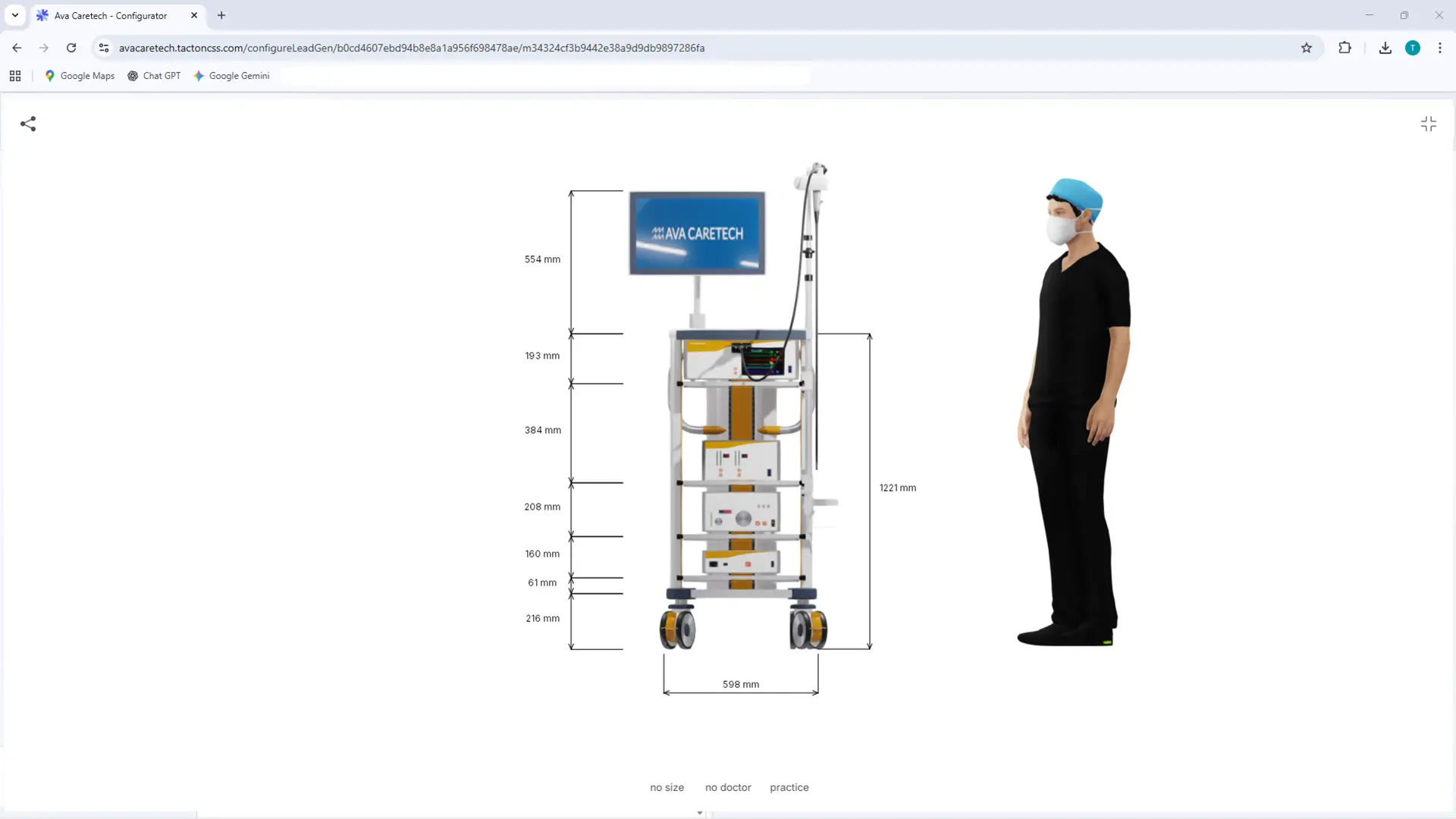
Tacton Design Automation
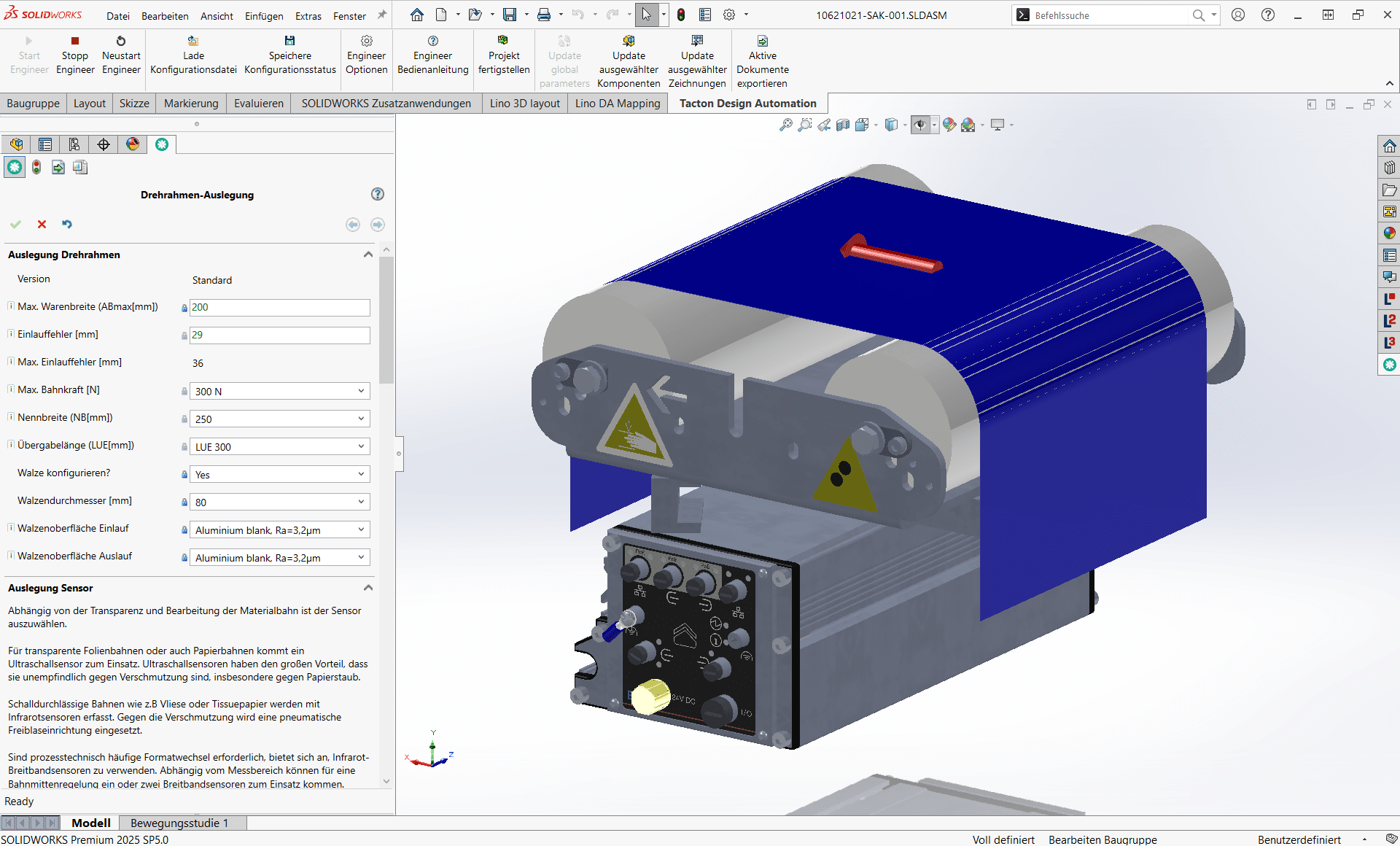
Transforms expert knowledge into intelligent rules to automatically generate complex 3D models, drawings, and bill of materials—saving up to 90% of engineering time.
Lino® Hub
Seamlessly connects sales, engineering, and manufacturing for end-to-end digital processes.
Seamlessly integrates CPQ, CAD, ERP, and PDM for error-free, automated data flows without media breaks.
Lino® Automate
Transforms routine CAD tasks into fully automated workflows using intelligent action lists and seamlessly integrates them with PDM, PLM, or ERP systems—for maximum time savings.
Lino® 2D fix
Drawing automation without manual adjustments for production-ready layouts.
Automatically optimizes drawing layouts, avoids dimension conflicts, and dynamically adjusts scales.
Relevant Processes
The digital engineering processes supported by Lino connect system integration, configuration, and automation into a seamless value chain – from the first customer contact through to the finished machine system.
Design Automation for Rapid Product Development
Optimize your design process with Design Automation and CAD automation. Product rules automatically generate 3D CAD models, 2D drawings, and bills of materials. This accelerates engineering processes, reduces errors, and significantly decreases routine engineering tasks.
Product Configuration for Individual Customer Solutions
Master product variety with a product configurator and CPQ system. Using rule-based variant configuration and guided selling, sales teams, partners, and customers create technically valid product variants, quotes, and configuration data – directly integrated into CAD and ERP systems.
System Integration for a Seamless Corporate IT Landscape
Connect your IT systems into a continuous data chain. Through system integration in mechanical engineering, CAD, ERP, CRM, and PDM/PLM systems are seamlessly linked. This creates a consistent digital thread along the entire product lifecycle.
Process Automation for Seamless Digital Workflows in Mechanical Engineering
Workflow and process automation connects engineering systems into seamless digital workflows. Automated workflows handle recurring tasks, reduce manual steps, and ensure consistent data between CAD, PDM, ERP, and CRM.
Generating Technical Drawings Automatically
Create technical drawings automatically from 3D CAD models. Drawing automation generates standards-compliant manufacturing documentation, automatically adjusts layouts, and reduces manual rework after model changes.
Together, we analyze your existing workflows and identify concrete potential for more efficient, digital processes – practical, structured, and with a clear focus on measurable value.
- Analysis of your engineering and sales processes
- Identification of optimization potential
- Clear roadmap for your digital transformation
See for Yourself

Frequently Asked Questions
The FAQs answer questions about the food processing machinery industry in the context of the Lino portfolio.
Find answers about hygienic design configuration and automated engineering of machines for food processing. Learn how Tacton CPQ and Tacton Design Automation ensure EHEDG compliance and FDA requirements from the very first quotation configuration, automate material assignments by hygienic zone, rule-based safeguard CIP-capable modules, and significantly reduce certification documentation efforts – without concentrating expert knowledge in the hands of a few individuals.
How does Lino Hub reduce the documentation and certification effort for food processing machines?
Lino Hub connects Tacton CPQ, Tacton Design Automation, the CAD system, and the PDM/PLM or ERP system into a seamless data chain. Since all configuration data – including material selection, hygienic zone assignments, and component specifications – is already structured within the system, material certificates (3.1 certificates), EHEDG declarations, and conformity declarations can be automatically compiled and linked to the respective machine file. The manual documentation effort that previously tied up engineering resources throughout the entire order cycle is reduced by up to 30% – and delivery is demonstrably accelerated.
How does Lino ensure that CIP-capable machine modules remain compliant during configuration?
Cleaning-in-place-capable assemblies require specific design requirements: dead-space-free construction, defined minimum flow velocities, and tested and certified sealing materials. These CIP-specific rules are stored directly as constraints in the Tacton CPQ rule set. The system exclusively permits CIP-compatible module combinations and blocks any configuration that violates one of these requirements – by design, not only in downstream quality checks. This significantly reduces queries from quality assurance and time-consuming approval loops.
How does Lino support the automatic creation of manufacturing drawings with hygienic design and surface finish specifications?
Lino 2D fix automatically derives standards-compliant manufacturing drawings from the generated 3D CAD model. For food processing machines, this includes not only geometric dimensions but also industry-specific specifications such as Ra values for surface finishes, cleaning zones, weld seam specifications, and seal details. The drawings are stored directly in the PDM/PLM system via Lino Automate, versioned, and linked to the associated material certificates (3.1 certificates) – providing complete, always audit-ready documentation for every machine delivered.
How does Tacton Design Automation automatically generate EHEDG-compliant 3D CAD models for food processing machines?
Once a machine is configured in the CPQ system, Lino Hub transfers the parameters to Tacton Design Automation. Design Automation then fully automatically generates a parametric 3D CAD model that demonstrably implements all hygienic design rules: dead-space-free joints, defined minimum radii at welds, EHEDG-compliant seal geometries, and material-compliant component assignments. The finished model is available as a STEP file for further planning – without manual CAD rework and with up to 90% time savings in engineering.
How does Lino automate material assignment by hygienic zone for food processing machines?
In food technology, different requirements apply to materials, surface finishes, and sealing materials depending on the contact zone – product-contact, splash-proof, or dry zone. Tacton CPQ incorporates this zone classification as part of the configuration rule set: depending on the zone of use, the system automatically assigns the compliant material selection and excludes impermissible combinations. This transforms deep material expertise, previously held by only a few employees, into scalable, error-free logic that even less experienced sales staff can use with confidence.
How does Tacton CPQ ensure that configurations for food processing machines are standards-compliant from the outset?
Tacton CPQ maps regulatory requirements such as EHEDG guidelines and FDA compliance directly as constraints within the configuration rule set. When configuring a machine – such as a filling or dosing system – the system automatically suggests the standards-compliant grade of stainless steel, seal class, and surface finish for each hygienic zone. Impermissible material combinations are excluded by design, ensuring that 100% of configured variants demonstrably meet the applicable hygiene and safety standards – from the very first quotation phase, without consultations with engineering.