


Digitalizing manufacturing processes –
consistently from quotation to production
Manufacturing: Short lead times, error-free bills of materials, and seamless system landscapes determine the competitive advantage in the manufacturing industry. Lino closes the gaps between sales, design, and production.
©ILLIG packaging solutions GmbH
Where manufacturing reaches its efficiency limits
Manual interfaces, inconsistent data, and growing variant diversity slow down throughput – and cost real money.
Manual handovers between departments
Between sales, design, work preparation, and production, data is transferred via email, Excel lists, or by phone. Every manual interface is a potential source of errors: wrong revisions, overlooked changes, and outdated bills of materials cause scrap, rework, and schedule delays.
Incorrect Bills of Materials and Master Data
If CAD bills of materials are not automatically synchronized with the ERP system, discrepancies can occur between the design and manufacturing bills of materials (BOMs). Incorrect material orders, missing purchased parts, and excess inventory are the direct consequences – with a measurable impact on manufacturing costs and delivery reliability.

©Glaston Germany GmbH

©Glaston Germany GmbH
Incorrect bills of materials and master data
When CAD bills of materials are not automatically synchronized with the ERP, discrepancies arise between the engineering and manufacturing bill of materials (BOM). Incorrect material orders, missing purchased parts, and excess inventory are the direct consequence – with a measurable impact on manufacturing costs and delivery reliability.
Variant growth overwhelms design
The product range grows faster through customer requests and market requirements than the design department can manually create new variants. Without automation, design becomes a bottleneck for sales and limits the growth of the company.
Use cases: How manufacturing companies benefit in practice
Three example scenarios showing how our solutions transform the manufacturing process:

End-to-end order process for configurable series assemblies
A manufacturing company sells configurable assemblies using a make-to-order process. Via a CPQ system, the sales team creates a technically verified configuration. Using system integration, the data is transferred to the design automation for automatic 3D model generation and bill of materials synchronization directly into the ERP – the entire process from quotation to production order runs without manual intervention. Customer change requests do not lead to new creation, but to parametric adaptation, which is implemented in minutes.

Automatic bill of materials transfer with validation
The integration solution reads the engineering BOM from the CAD system, converts it into the ERP format, and automatically checks for completeness, article number consistency, and material availability. Discrepancies are output as a validation report before the bill of materials is created in the ERP – incorrect material orders are thus systematically avoided. The result: consistent data in CAD and ERP, without any employee having to manually reconcile them.

Variant management with configurable modular systems
The company transfers its grown variant diversity into a structured modular system. The design automation software generates new variants rule-based from the modular system – the design department only defines rules and modules, while variant generation takes place fully automatically. Sales teams and partners can also generate new variants without any CAD knowledge. This way, the product range grows without placing additional burden on the design department.
Consistently automated: Measurable results.
Connect all relevant systems into a seamless process chain – without data silos, without media breaks –
and benefit from shorter lead times, fewer errors, and higher data consistency between IT systems.
50 %
shorter lead times from
order to production
≥ 30 %
fewer errors in order processing
99,9 %
data consistency between CAD and ERP
Software for end-to-end manufacturing processes
Suitable software products to seamlessly automate the order-to-production process:
Tacton CPQ
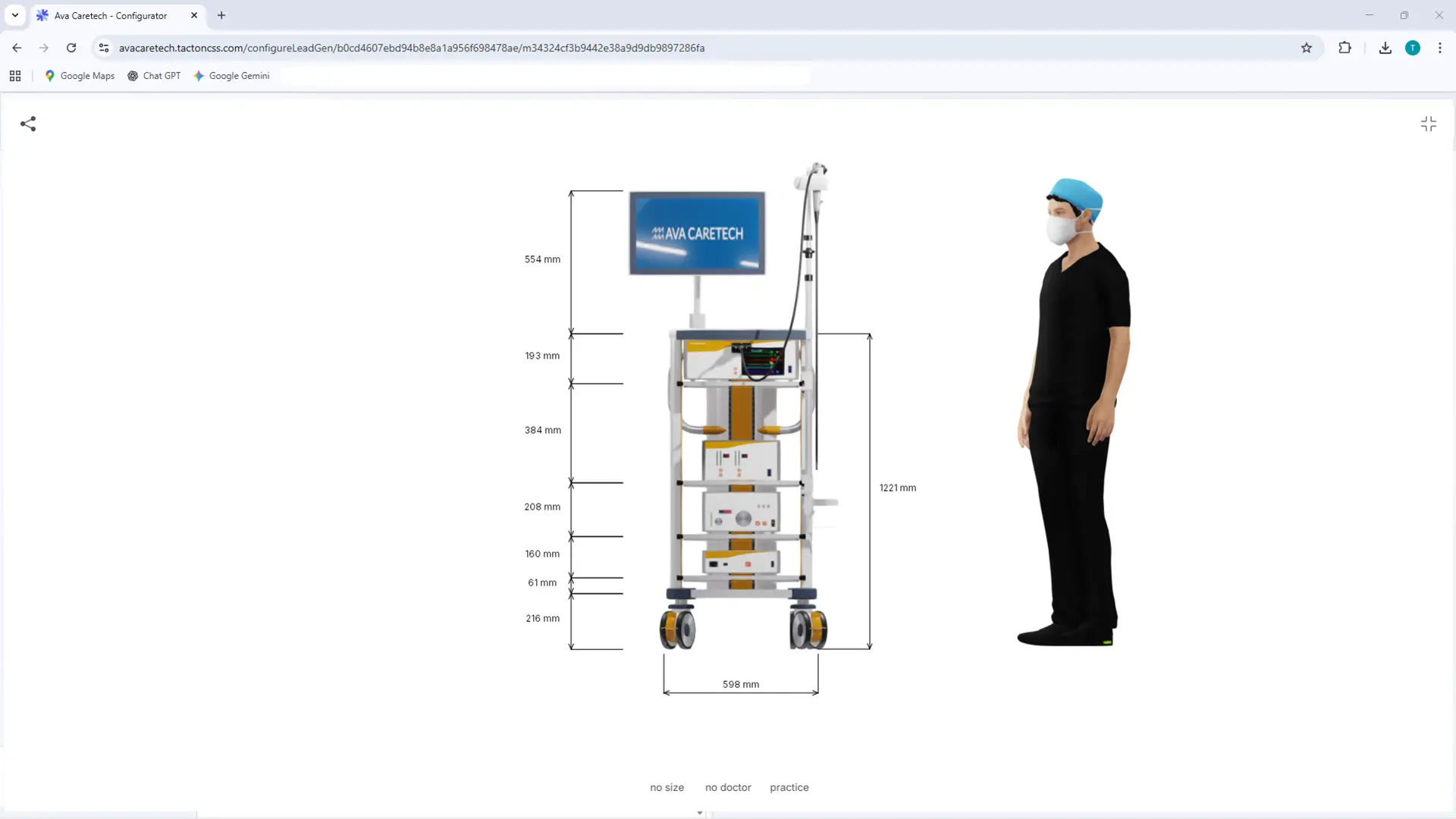
The constraint-based engine intuitively guides users to a technically sound solution. It significantly speeds up the quote generation process and ensures maximum price transparency through automated real-time calculations for the sales team.
Tacton Design Automation
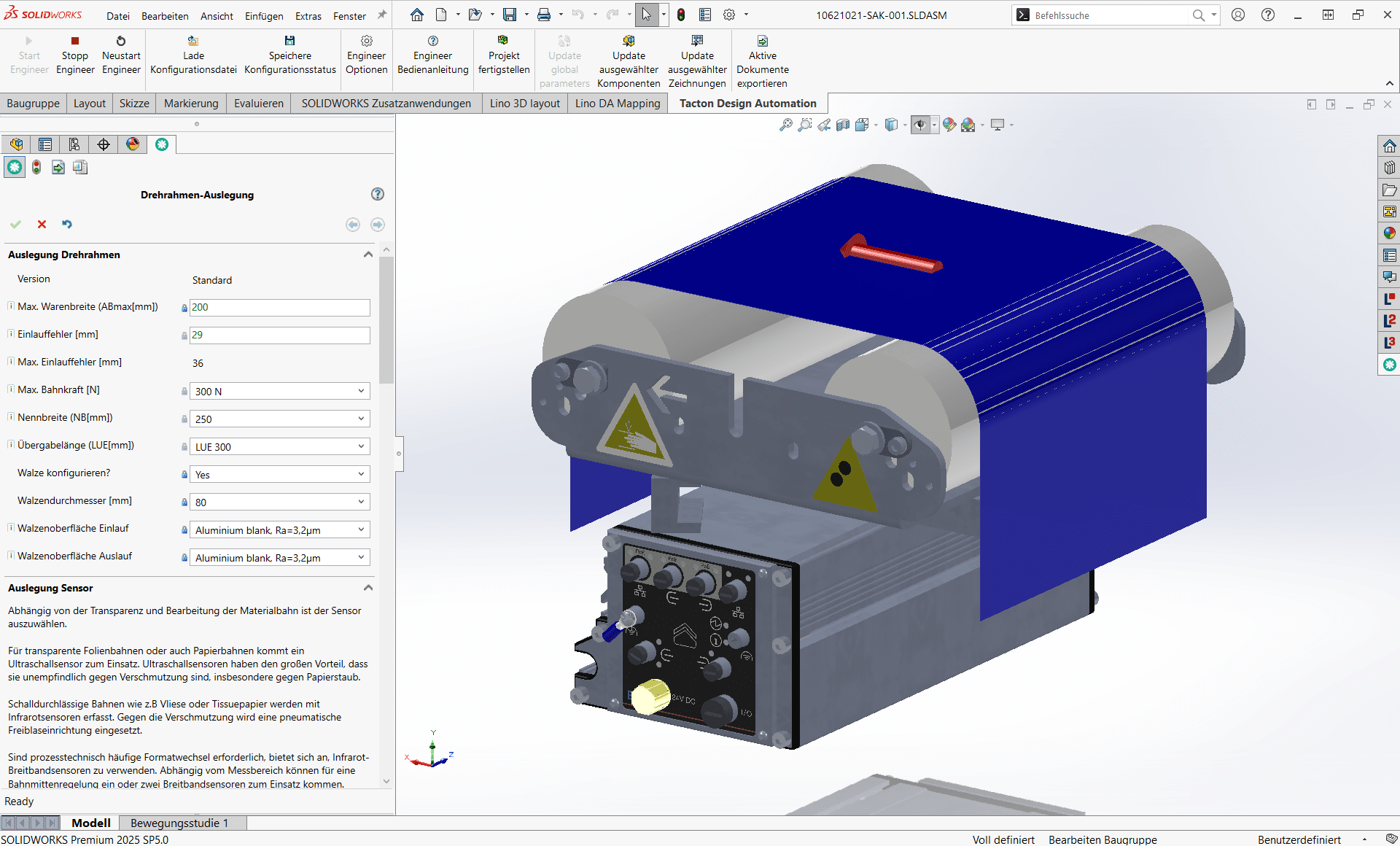
Transforms expert knowledge into intelligent rules to automatically generate complex 3D models, drawings, and bill of materials—saving up to 90% of engineering time.
Lino® Hub
Seamlessly connects sales, engineering, and manufacturing for end-to-end digital processes.
Seamlessly integrates CPQ, CAD, ERP, and PDM for error-free, automated data flows without media breaks.
Lino® Automate
Transforms routine CAD tasks into fully automated workflows using intelligent action lists and seamlessly integrates them with PDM, PLM, or ERP systems—for maximum time savings.
Relevant Processes
The digital engineering processes supported by Lino connect system integration, configuration, and automation into a seamless value chain – from the first customer contact through to the finished machine system.
Design Automation for Rapid Product Development
Optimize your design process with Design Automation and CAD automation. Product rules automatically generate 3D CAD models, 2D drawings, and bills of materials. This accelerates engineering processes, reduces errors, and significantly decreases routine engineering tasks.
Product Configuration for Individual Customer Solutions
Master product variety with a product configurator and CPQ system. Using rule-based variant configuration and guided selling, sales teams, partners, and customers create technically valid product variants, quotes, and configuration data – directly integrated into CAD and ERP systems.
System Integration for a Seamless Corporate IT Landscape
Connect your IT systems into a continuous data chain. Through system integration in mechanical engineering, CAD, ERP, CRM, and PDM/PLM systems are seamlessly linked. This creates a consistent digital thread along the entire product lifecycle.
Process Automation for Seamless Digital Workflows in Mechanical Engineering
Workflow and process automation connects engineering systems into seamless digital workflows. Automated workflows handle recurring tasks, reduce manual steps, and ensure consistent data between CAD, PDM, ERP, and CRM.
Simplified 3D CAD Models for Fast, Reliable Processes
Reduce complex assemblies with CAD model simplification and data reduction. Lightweight models improve the performance of CAD systems and enable the use of models for simulation, VR/AR, or web visualization.
Generating Technical Drawings Automatically
Create technical drawings automatically from 3D CAD models. Drawing automation generates standards-compliant manufacturing documentation, automatically adjusts layouts, and reduces manual rework after model changes.
Together we analyze your existing processes and identify concrete potential for more efficient, digital workflows – practical, structured, and with a clear focus on measurable benefits.
- Analysis of your engineering and sales processes
- Identification of optimization potential
- Clear roadmap for your digital transformation
See for yourself

Frequently Asked Questions
These FAQs address questions regarding the manufacturing industry within the context of the Lino portfolio.
Here, you will find answers concerning the end-to-end digitalization of manufacturing processes—from quotation to production. Discover how Lino and Tacton eliminate manual interfaces, automatically synchronize Bills of Materials (BOMs), generate product variants based on rules, and seamlessly integrate CAD, ERP, and PDM systems—ensuring shorter lead times and error-free data throughout the entire process chain.
Can the Lino AI Agent be used in manufacturing companies to support processes?
Yes. The Lino AI Agent is an AI solution specialized in industrial engineering processes that supports manufacturing companies in interpreting requirements, selecting assemblies, and handling documentation. It can be integrated into existing system landscapes (CAD, ERP, PDM) and processes technical documents, bills of materials, and customer inquiries to provide context-aware support for engineers and sales staff – not replacing expertise, but significantly reducing routine workload.
How does Lino Automate help automate recurring CAD tasks in manufacturing?
Lino Automate enables the automation of routine CAD tasks through configurable action lists – without programming. Typical use cases in manufacturing include the automatic derivation of standards-compliant manufacturing drawings after model changes, bulk processing of export formats (e.g., STEP, PDF), and the automatic transfer of data to PDM or ERP systems. This significantly reduces manual rework after design changes and accelerates release processes.
How does Lino accelerate the order-to-production process in the manufacturing industry?
Lino connects CPQ, CAD, PDM, and ERP into a seamless, automated process chain. A technically validated configuration from the Tacton CPQ system automatically triggers design automation in Tacton Design Automation, generates the 3D model, and transfers the bill of materials and manufacturing data directly into the ERP without manual intervention. Manufacturing companies can thereby achieve up to 50% shorter lead times from order receipt to production start.
How does Tacton Design Automation support manufacturing companies dealing with growing product variants?
Tacton Design Automation encodes engineering expertise into rule-based logic, from which new product variants are generated fully automatically – including 3D CAD model, 2D drawing, and bill of materials. Manufacturing companies with make-to-order processes can thereby reduce manual engineering effort per order by up to 90% and expand their product portfolio without adding workload to the engineering department.
Which Lino solution automates the transfer of bills of materials from CAD to ERP?
Lino Hub handles fully automated BOM synchronization between CAD and ERP. The solution reads the engineering BOM, validates it based on configurable check rules (e.g., missing part numbers, invalid material data, or open revisions), and generates a structured validation report before the data is transferred to the ERP. This systematically prevents incorrect material orders and production stoppages.
How can CAD-ERP integration in manufacturing be automated?
Lino Hub connects CAD systems such as SolidWorks, CATIA, or Creo bidirectionally with ERP systems like SAP or proALPHA. Bills of materials (BOMs) are automatically read from the CAD system, transformed into the ERP format, and validated for completeness and part number consistency before being created in the ERP. Manual data transfers via Excel or email are completely eliminated – resulting in data consistency of up to 99.9% between engineering and manufacturing BOMs.