


Proof of Concept (Poc)
Leading Innovation. Thoroughly validated. Quickly operational.

Validate Feasibility.
Minimize Risks.
Protect Investments.
Before you commit to a major investment, we validate technical feasibility using a real‑world use case and assess integration potential. Through proven methodologies, structured testing, and transparent success criteria, we show exactly how configuration, automation, and integration will perform in your actual system landscape.
For complex, high‑stakes projects in engineering, a Proof of Concept (PoC) provides the clarity and confidence needed for sound investment decisions.
Delivering Results, Not Just Reports
Standard software typically covers around 80% of your requirements. The remaining 20% – automation, data mapping, governance, and integration – determines whether you gain a real competitive advantage.
In our Proof of Concept, we demonstrate:
- how data flows seamlessly between CAD, PDM/PLM, ERP, and configuration systems
- where integration gaps exist and how to close them
- which levels of automation and integration are realistically achievable
- how quickly you can expect tangible business results
These insights give you the foundation you need to take the next steps with confidence.

Have your specific use case evaluated in a practical feasibility study – with a clear scope and a binding timeline.
- Clearly defined use case
- Minimized risk and transparent ROII
- Defined results within a fixed timeframe
Webinars
Register now for our free webinar or contact an expert for a personalized consultation.
Our webinars are intended exclusively for companies within our defined target audience.
Simply integrate. Intelligently automate.
Digital engineering processes for mechanical and plant engineering: Automate design, product configuration, and workflows; seamlessly integrate CAD, PDM, and ERP; and accelerate sales, planning, and manufacturing—efficiently, error-free, and with future-proof connectivity.
Latest News
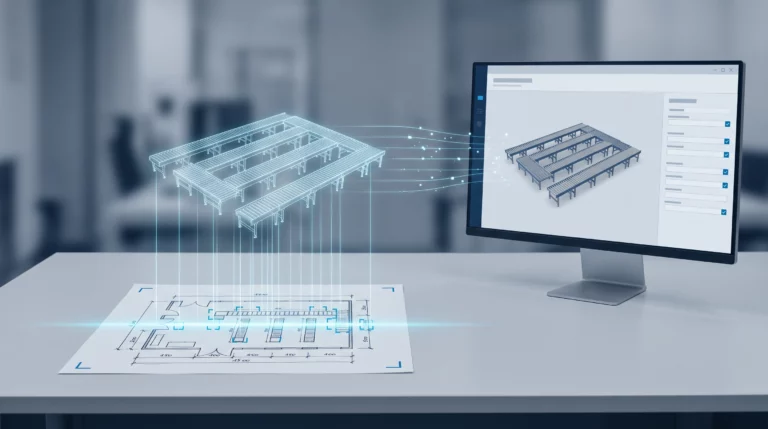
Engineering AI: Why Customer Requirements No Longer Need to Be Retyped
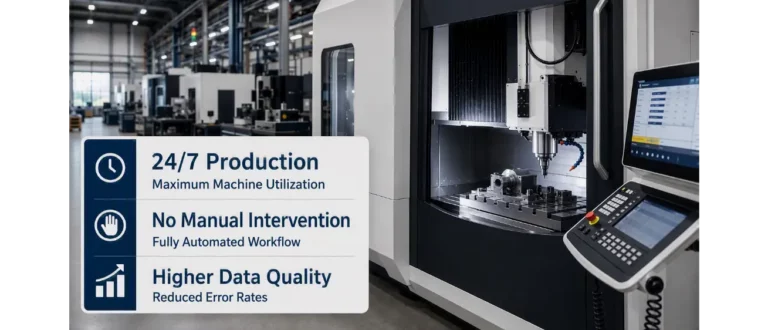
CAM Programming: Why No One Will Do It by Hand Anymore in the Future

Tyrolit Group Achieves 24/7 Production with Lino® Hub
Frequently Asked Questions
These FAQs address questions about the Proof of Concept in the context of the Lino portfolio.
Learn how Lino technically validates integration and automation solutions for mechanical and plant engineering — using real-world use cases, transparent success criteria, and structured testing. Discover how a Lino PoC minimises investment risk, exposes the 20% gap in your standard software, and delivers the reliable decision-making basis you need for your digital transformation.
Which companies and projects in mechanical and plant engineering are best suited for a Lino PoC?
A Lino PoC is particularly recommended for mechanical and plant engineering companies facing complex, strategically significant digitalisation initiatives, such as introducing design automation, linking CPQ systems with CAD and ERP, implementing engineering AI, or building an enterprise-wide integration platform based on Lino® Hub. It is especially valuable where heterogeneous system landscapes (SaaS, on-premise, hybrid) carry high integration risks and misdirected investment must be avoided. With more than 20 years of industry experience and over 100 active customers, Lino brings the domain expertise needed to align the PoC precisely to your specific sector and process maturity.
How does Lino incorporate AI components into the Proof of Concept?
Where appropriate, Lino integrates AI-powered components — such as the Lino® AI Agent — into the validated workflow already at the PoC stage. This means the exercise not only tests the technical feasibility of classic system integration, but also evaluates where Artificial Intelligence can accelerate process steps, eliminate sources of error, or provide automated decision support. The Human-in-the-Loop approach ensures that AI recommendations remain transparent, auditable and GDPR-compliant throughout. The result is a validated picture of the level of intelligence achievable within your actual engineering and sales environment.
What concrete results does a Lino PoC deliver and what sets it apart from a classic pilot project?
A Lino PoC delivers verifiable technical results rather than abstract reports: it shows how data flows seamlessly between CAD, PDM/PLM, ERP and configuration systems, where integration gaps exist, and how to close them. Unlike a traditional pilot project, the PoC is built around transparent success criteria and guaranteed outcomes, with clearly defined KPIs agreed before the work begins. This creates planning certainty for both management and IT, and provides the solid foundation needed for the subsequent full-scale implementation.
What is a Lino Proof of Concept and why does it matter before an investment decision?
A Lino Proof of Concept (PoC) is a structured technical validation carried out before committing to a significant investment in automation or integration solutions. Using a real-world use case from your own organisation — such as connecting CAD, PDM/PLM and ERP — it demonstrates exactly how configuration, automation and integration will perform within your specific system landscape. Standard software typically covers around 80% of requirements; the remaining 20% — individual data flows, governance and system integration — determines whether you gain a genuine competitive advantage. The PoC makes precisely this gap visible and answers how deep automation can realistically go and when tangible results can be expected.