


Engineering Automation
End-to-end automation of your technical order processing
From Quotation to Manufacturing:
Automating Engineering Processes End-to-End
In mechanical and plant engineering, lead time, variant management, and data quality determine market success. Yet the same recurring gaps emerge between sales, engineering, and manufacturing: manual data handoffs, redundant entries, and error-prone coordination between CAD, PDM, ERP, and CRM. Standard software typically covers around 80% of requirements—the critical 20% remains unaddressed.
Engineering Automation closes exactly this gap. Rather than optimizing individual tools, Engineering Automation automates the entire technical order processing workflow as a continuous process chain—from initial inquiry through configuration and engineering to manufacturing. Rule-based, cross-system, and with measurable results.
Integration Alone Is Not Enough
Traditional system integration connects systems with one another. However, connectivity alone does not define how systems behave. Engineering Automation goes one step further: it establishes an independent definition layer that specifies how engineering decisions are governed across all involved systems.
Product logic is defined once and subsequently executed consistently across all involved systems—regardless of whether execution takes place in CAD, CPQ, PDM, or ERP. The result: deterministic, traceable, and auditable processes that not only run faster but also remain manageable under real-world complexity.

Four Levels of Engineering Automation
Engineering Automation is not a single tool, but an architecture.
It connects four automation levels into a continuous process chain:
Level 1: Configuration Automation
Complex, variant-rich products are configured using rule-based logic and technically validated. Guided Selling leads the sales team to the optimal solution, while CPQ systems automatically generate quotations with accurate pricing. Sales and engineering work on a shared data foundation for the first time—seamlessly from customer conversation to production order.
Level 2: Design Automation
Configuration results automatically generate 3D CAD models, 2D drawings, and bills of materials. Product knowledge is encoded into intelligent rule sets that automatically validate and document every variant. Design engineers are freed from repetitive tasks and can focus on innovation.
Level 3: Integration Automation
The Lino® Hub, as the central integration platform, connects CAD, CAM, CPQ, PDM/PLM, ERP, and CRM into a seamless, media-break-free data chain. Standardized connectors, bidirectional data flows, and defined data models ensure that no information needs to be entered twice or transferred manually.
Level 4: Intelligent Automation
AI-powered agents support requirements capture, design optimization, and process control. Not as a black box, but in an explainable, auditable manner with human-in-the-loop principles. Deterministic logic and explainable AI complement each other—enabling automation that augments engineers, not replaces them.
Benefits of Engineering Automation
Ready for the Next Step?
Automate your engineering processes end-to-end: With Engineering Automation, you connect configuration, design, integration, and AI into a continuous, rule-based process chain—faster, error-free, and scalable. Learn in one of our webinars how we accelerate your processes, or start your non-binding process consultation here.
Together, we analyze your existing workflows and identify specific opportunities for more efficient, digital processes – in a practical, structured manner and with a clear focus on measurable benefits.
- Analysis of your engineering and sales processes
- Identification of opportunities for optimization
- A clear roadmap for your digital transformation
Check it out for yourself
Webinars
Register now for our free webinar or contact an expert for a personalized consultation.
Our webinars are intended exclusively for companies within our defined target audience.
The Services that make Digital Transformation Projects a Success
Successful digital transformation isn’t achieved simply by using software. We support and advise our clients throughout the entire lifecycle—from the initial idea to stable operation.


Software for Engineering Automation
Our software and solutions address the challenges that arise when industrial processes reach their limits: product variety, manual handoffs, and a lack of integration between sales, engineering, and IT.
Lino® Hub
Seamlessly connects sales, engineering, and manufacturing for end-to-end digital processes.
Seamlessly integrates CPQ, CAD, ERP, and PDM for error-free, automated data flows without media breaks.
Lino® Automate
Transforms routine CAD tasks into fully automated workflows using intelligent action lists and seamlessly integrates them with PDM, PLM, or ERP systems—for maximum time savings.
Lino® AI Agent
Intuitively captures requirements through voice input, prevents configuration errors, and connects requests directly to CAD automation and ERP systems for a seamless digital workflow.

Cosling® Configurator
A configuration engine designed to handle complex product logic. Processes technical and business rules for configuring complex products.

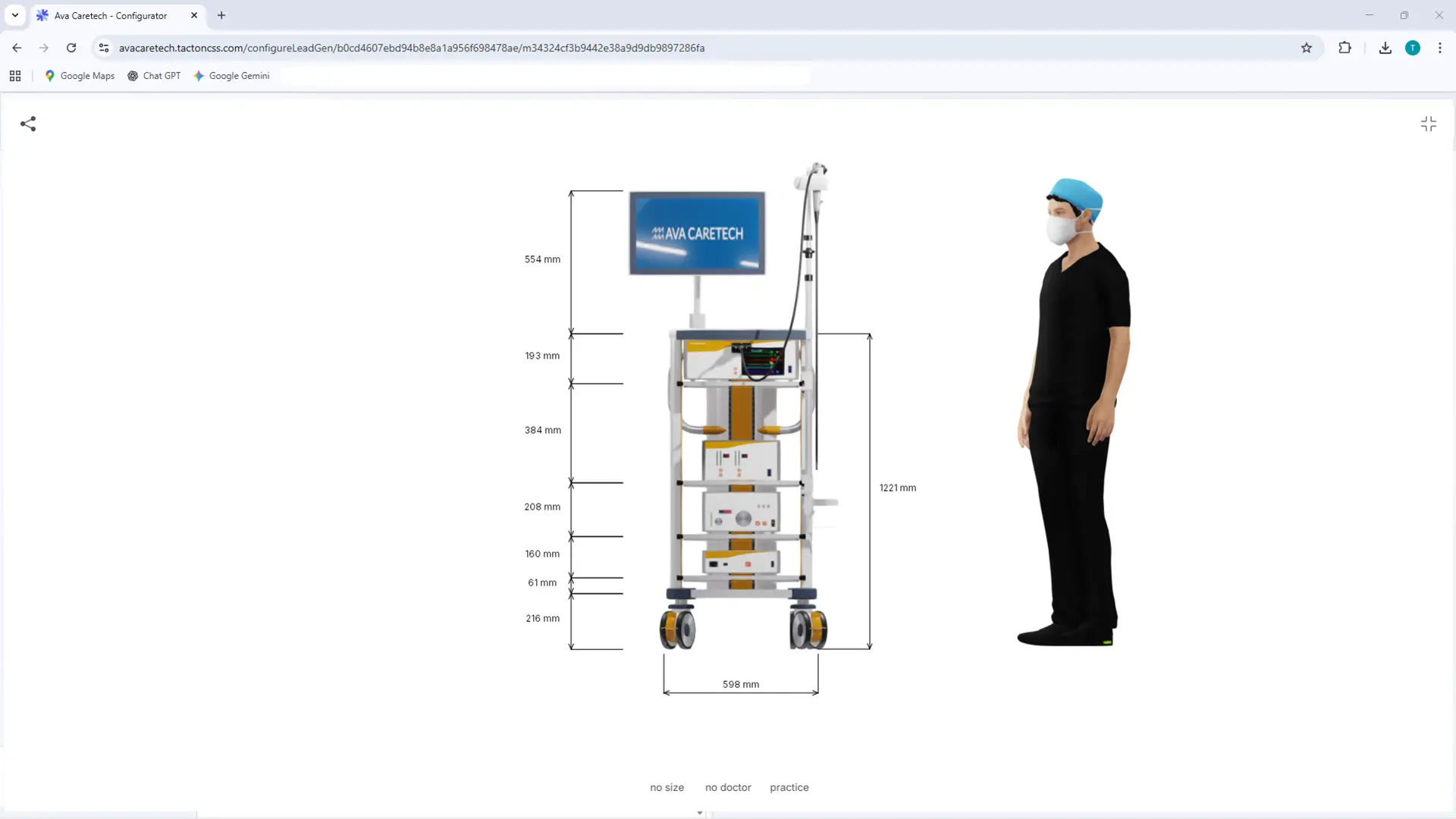
Tacton CPQ
The constraint-based engine intuitively guides users to a technically sound solution. It significantly speeds up the quote generation process and ensures maximum price transparency through automated real-time calculations for the sales team.
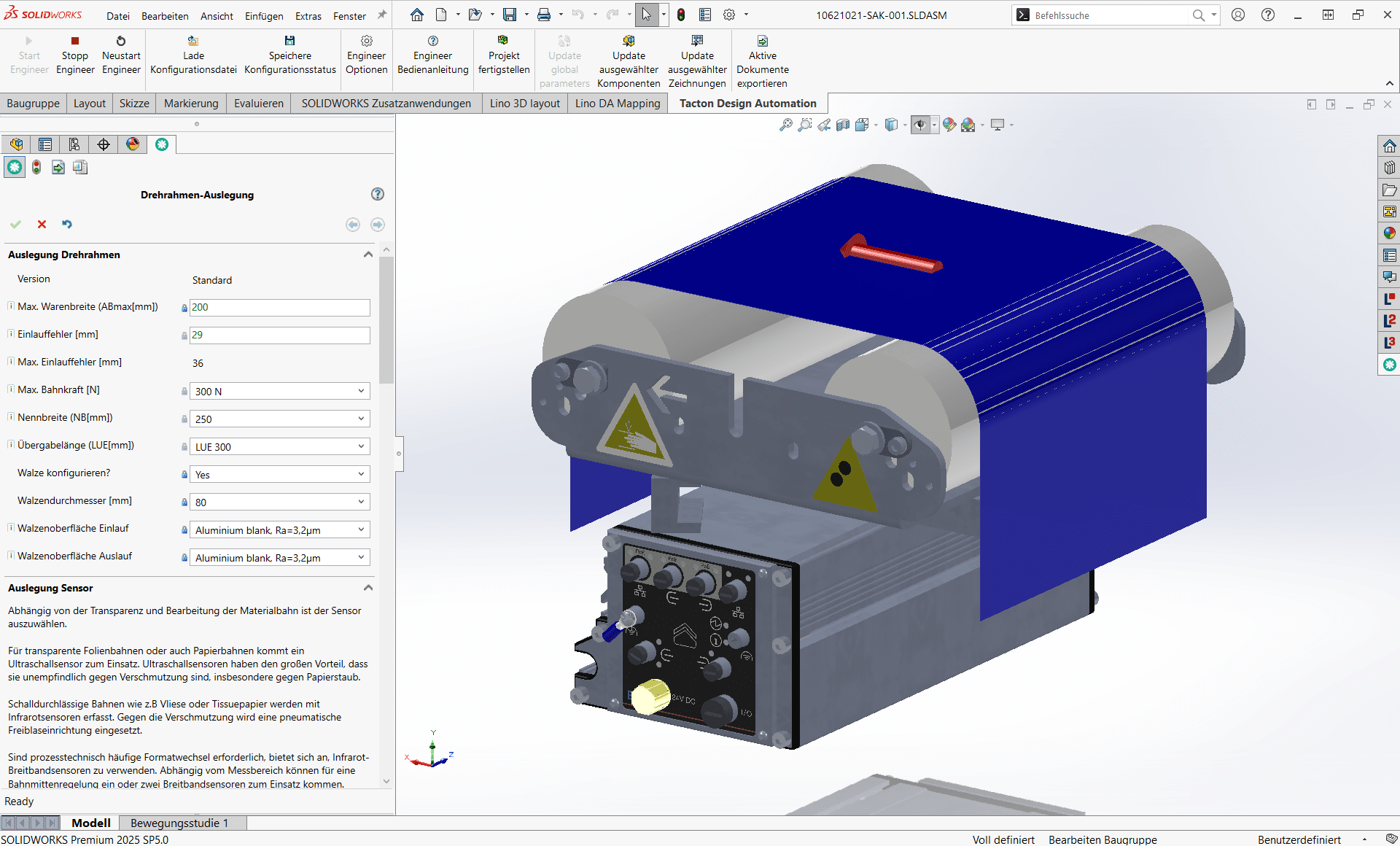
Tacton Design Automation
Transforms expert knowledge into intelligent rules to automatically generate complex 3D models, drawings, and bill of materials—saving up to 90% of engineering time.
Simply integrate. Intelligently automate.
Digital engineering processes for mechanical and plant engineering: Automate design, product configuration, and workflows; seamlessly integrate CAD, PDM, and ERP; and accelerate sales, planning, and manufacturing—efficiently, error-free, and with future-proof connectivity.
Frequently asked questions about Engineering Automation
Knowledge base on Engineering Automation, Process Integration and End-to-End Automation in Mechanical Engineering.
Here you will find answers to all your questions regarding the end-to-end automation of engineering processes in mechanical and plant engineering.
Find out how configuration, design and system integration are combined to form a seamless process chain, and how engineering automation shortens lead times, reduces errors and eases the workload on engineering teams.
How is product knowledge protected?
Engineering Automation captures product knowledge in the form of digital rule sets that are version-controlled, documented and protected against unauthorised access. IP protection is built into the architecture: deterministic logic ensures that knowledge is executed in a controlled manner, but is not accessible without authorisation. GDPR-compliant architectures and clear role models complement this protection at the infrastructure level.
Which companies is Engineering Automation suitable for?
Engineering Automation is ideal for industrial companies dealing with a wide variety of product variants and complex order processing procedures – typically in mechanical and plant engineering, automation technology, packaging machinery manufacturing, conveyor technology, component and series production, and related sectors. Wherever recurring configuration decisions, design tasks and system handovers occur, there is significant potential for automation.
What role does AI play in Engineering Automation?
Artificial intelligence (AI) supports engineers in requirements gathering, design optimisation and process control. At Lino, AI is always explainable, auditable and integrated with a human-in-the-loop approach – not a black box, but a tool that complements deterministic rule-based logic. It is GDPR-compliant and can be used in accordance with relevant standards.
How quickly can Engineering Automation be implemented?
Thanks to modular software components and tried-and-tested templates, Lino delivers measurable business benefits in less than 30 days. The process typically begins with a clearly defined proof of concept that guarantees results and involves a manageable investment. From there, the automation can be scaled step by step to cover further use cases and business areas.
What does the missing 20% mean in Engineering Automation?
Standard CAD, PDM and ERP systems each cover around 80% of typical requirements. The remaining 20% – process-specific automation logic, cross-system rules and industry-specific workflows – remain unaddressed and are often resolved on a project-by-project basis. Lino delivers this 20% as standardised, tested software products – stable, scalable and ready for productive use in under 30 days.
Why is traditional System Integration not enough?
Traditional System Integration connects systems and facilitates data exchange. However, it does not define how the connected systems should behave under real-world complexity. Engineering Automation creates a definition layer that controls how configuration decisions affect the entire system – from variant selection in sales to the bill of materials in manufacturing. Integration is necessary, but not sufficient.
How does Engineering Automation differ from Design Automation?
Design Automation automates the design process within a CAD system – the generation of 3D models, drawings and bills of materials from rule sets. Engineering Automation encompasses Design Automation as one of four levels, but goes beyond it: it includes product configuration, system integration across PDM/ERP/CRM, and AI-supported process control. Engineering automation considers the entire process chain, not just the design stage.
What does Engineering Automation mean in the machinery and plant engineering sector?
Engineering Automation refers to the end-to-end automation of technical order processing – from the customer enquiry through configuration and design to manufacturing. Rather than optimising individual tools, Engineering Automation combines configuration logic, CAD automation, system integration and AI-supported process control into a coherent process chain. The aim: fewer manual interventions, shorter lead times and consistent data across all systems.