


3D Layout Planning
Assemble Complex Production Lines
From Vision to Validated Layout
In mechanical engineering, strong visualization can be the deciding factor between winning and losing a contract. With 3D layout planning, you can elevate your project design to a whole new dimension.
Plan, review, and present complex production lines directly in 3D. Instead of relying on abstract floor plans, you create layouts that give customers an immediate, realistic understanding of your concept – building trust and helping identify potential issues early on.

Collaborative Layout Creation
Eliminate the tedious back‑and‑forth between sales and engineering. Because all layouts are created in the same CAD system your design team uses, models transfer seamlessly – without data loss, conversion issues, or manual rework.
Intuitive drag‑and‑drop tools let users with limited CAD experience combine components into complex systems quickly and accurately. The result is a seamless layout‑planning workflow that brings engineering, sales, and manufacturing together.
Data for Downstream Processes
3D layout design delivers much more than compelling visuals. It provides structured data that enables accurate quotations, efficient ordering, and smooth installation planning.
This makes 3D layout design the central data backbone for your entire project – from initial concept development to on‑site implementation. All required engineering drawings for manufacturing and installation can be generated automatically based on the latest layout data.
Key Advantages of 3D Layout Planning
Plan your projects with a head start!
Join one of our webinars to learn how to revolutionize your plant design, or schedule a personal consultation today.
Together, we analyze your existing workflows and identify specific opportunities for more efficient, digital processes – in a practical, structured manner and with a clear focus on measurable benefits.
- Analysis of your engineering and sales processes
- Identification of opportunities for optimization
- A clear roadmap for your digital transformation
Check it out for yourself
Webinars
Register now for our free webinar or contact an expert for a personalized consultation.
Our webinars are intended exclusively for companies within our defined target audience.
The Services that make Digital Transformation Projects a Success
Successful digital transformation isn’t achieved simply by using software. We support and advise our clients throughout the entire lifecycle—from the initial idea to stable operation.


Software for 3D Layout Planning
Our software and solutions address the challenges that arise when industrial processes reach their limits: product variety, manual handoffs, and a lack of integration between sales, engineering, and IT.
Lino® 2D fix
Drawing automation without manual adjustments for production-ready layouts.
Automatically optimizes drawing layouts, avoids dimension conflicts, and dynamically adjusts scales.
Lino® 3D layout
Uses drag-and-drop and snap technology for collision-free layouts. Ensures seamless data flow from sales to installation without any data loss.

Tacton Design Automation
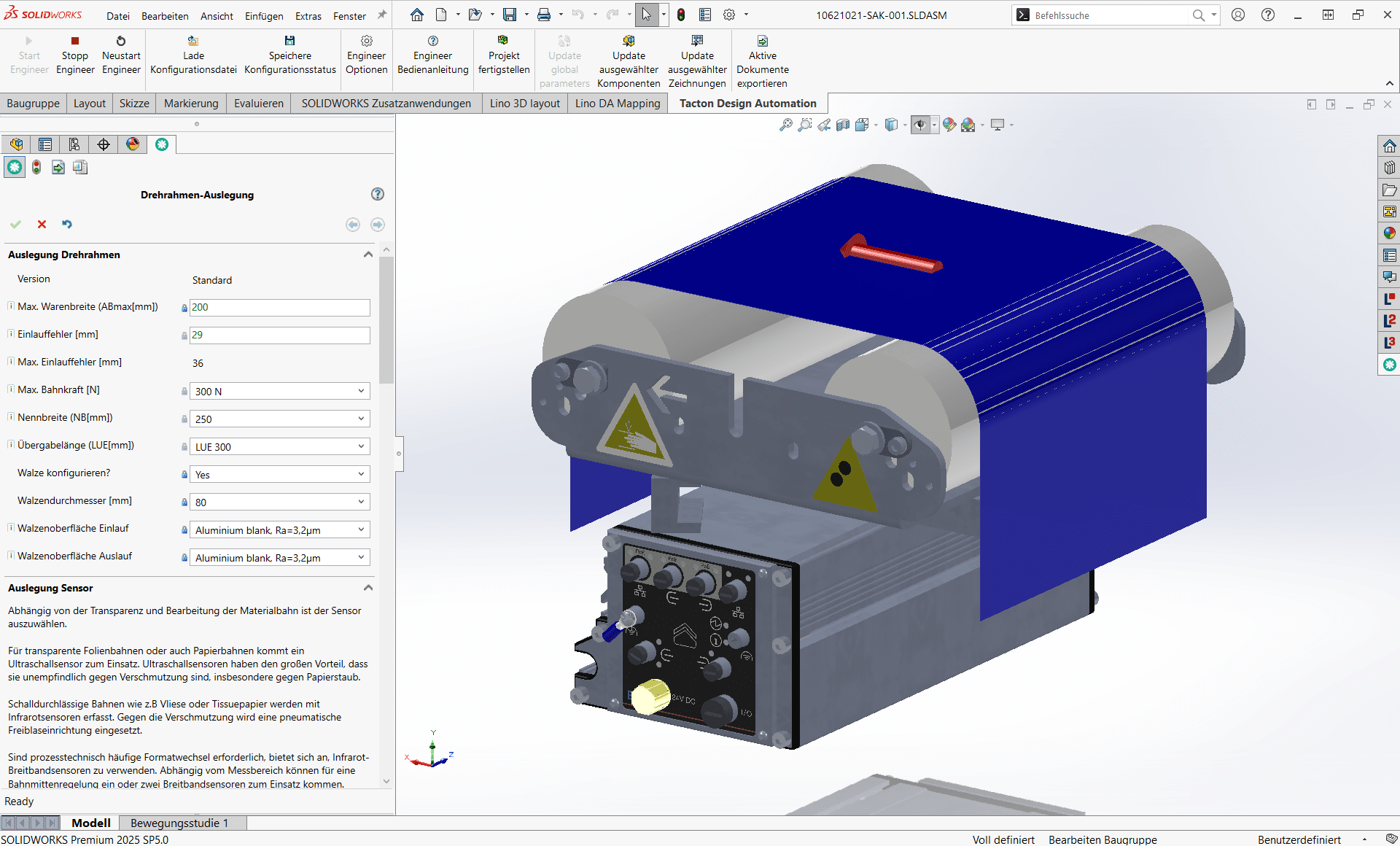
Transforms expert knowledge into intelligent rules to automatically generate complex 3D models, drawings, and bill of materials—saving up to 90% of engineering time.
Lino® Simplify
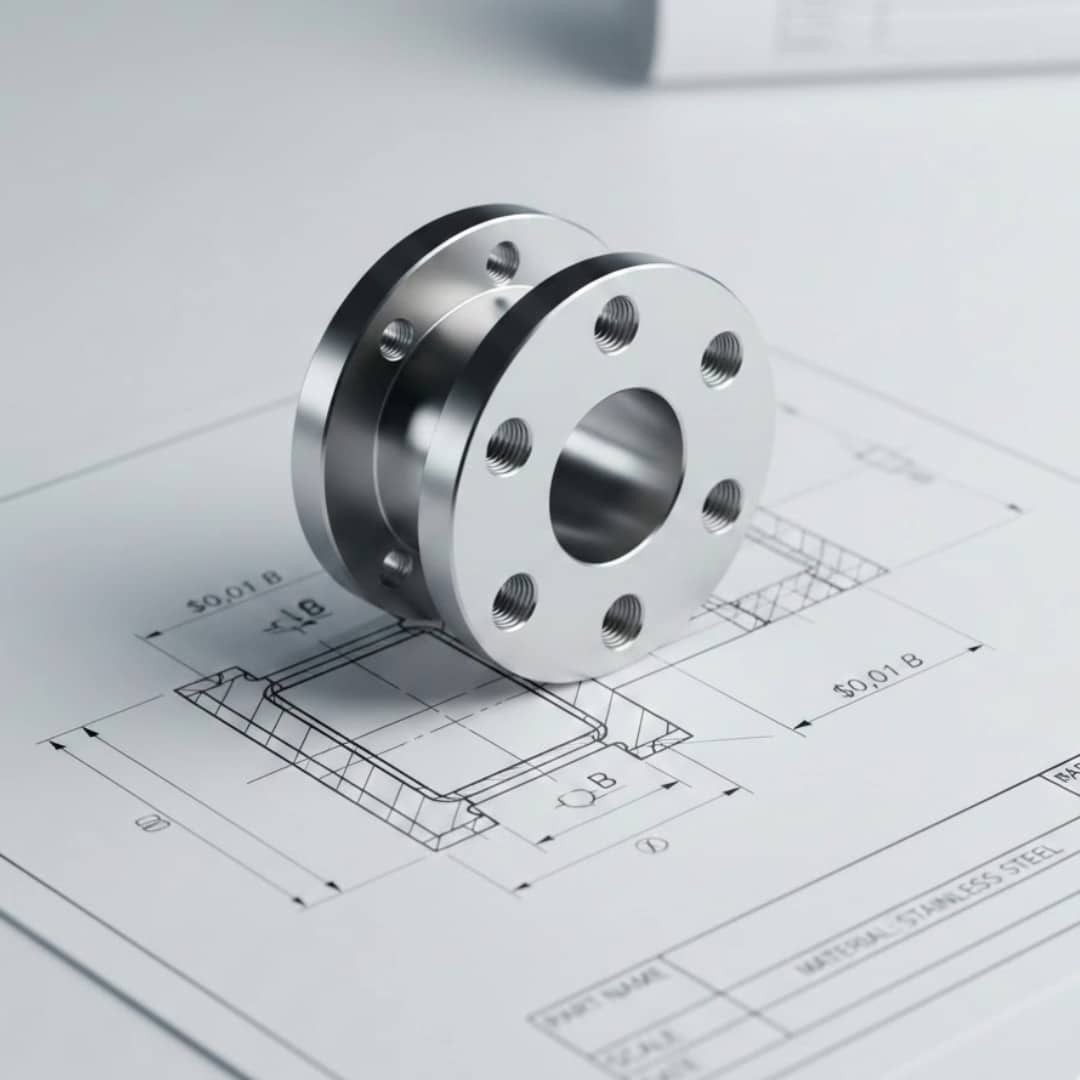
Reduces 3D complexity for maximum performance and secure protection of intellectual property.

Simply integrate. Intelligently automate.
Digital engineering processes for mechanical and plant engineering: Automate design, product configuration, and workflows; seamlessly integrate CAD, PDM, and ERP; and accelerate sales, planning, and manufacturing—efficiently, error-free, and with future-proof connectivity.
Frequently Asked Questions about 3D Layout Planning
Knowledge Base on Layout Planning, Plant Visualization, and Collision Detection.
This FAQ section explains how to plan machinery and equipment in three-dimensional layouts.
Learn how realistic 3D models help visualize spatial relationships, reduce planning errors, and facilitate coordination with customers and project teams.
For which companies is 3D layout planning particularly useful?
Companies in mechanical and plant engineering with complex production lines or highly variable projects benefit the most. Wherever spatial planning is critical for quotation and implementation, 3D layout planning significantly increases efficiency, transparency, and competitiveness.
What data are generated from 3D layout planning?
The 3D model directly delivers relevant information (for example the bill of materials, BOM) for quotation costing, purchasing, and installation preparation. If required, 2D plans can also be generated automatically.
What role does collision checking play?
Spatial conflicts and interferences can be detected already in the planning phase. Early collision checks prevent costly rework and significantly increase planning reliability.
How does 3D layout planning improve collaboration within a company?
Since layouts are created in the same CAD system used for design engineering, there is no need for manual data transfer between departments. Sales, planning, and engineering work on a consistent data basis—without media discontinuity.
Can users without CAD expertise also create layouts?
Yes. Intuitive tools such as drag-and-drop functions allow users with little CAD experience to position components quickly and safely in space. This makes project planning more efficient and accessible across teams.
How does 3D layout planning support the sales process?
Professional 3D layouts give customers a realistic impression of the planned system. This builds trust and speeds up decision-making processes. At the same time, quotations can be prepared more quickly, since planning and costing data can be derived directly from the model.
Why is 3D layout planning superior to 2D planning?
Unlike 2D sketches, 3D planning shows actual space conditions, heights, clearances, and movement areas. This makes coordination with customers easier and reduces misunderstandings. Spatial conflicts become visible at an early stage, before costly modifications are required during installation.
What does 3D layout planning mean in mechanical engineering?
3D layout planning enables the realistic design of complete machine and plant layouts directly within the CAD system. Instead of abstract 2D floor plans, precise three-dimensional models are created that make spatial relationships immediately visible. This allows planning errors to be identified at an early stage and projects to be implemented more reliably.