


Configuring Heating Systems and Burners –
Performance-Matched, Efficient, Standards-Compliant and Integrated
Industrial burners, furnaces and electric heating systems must be designed precisely for the required output, medium and installation conditions. Strict emissions and safety standards turn every configuration into a regulatory test case. Lino and Tacton automate sizing, engineering and documentation end-to-end.
©GC-heat Gebhard GmbH & Co. KG
Why Heating Technology Projects are Especially Demanding
Complex sizing, strict emissions standards, heavy advisory effort in sales and extensive documentation obligations – a sector that calls out for automation:
Complex, output-dependent sizing
Configuring a burner or heating system depends on numerous parameters: heat output, fuel type, temperature range, installation conditions, process atmosphere and control requirements. Correct sizing requires deep expert knowledge, which is typically held by only a small number of specialists within the company – and quotation speed stands or falls with their availability.
Safety and emissions standards
Industrial burners and furnaces are subject to strict safety requirements (CE, ATEX, Machinery Directive) and emissions limits (BImSchV, TA Luft, EN 746). Every configuration must be demonstrably compliant – manual verification is time-consuming and error-prone. A single overlooked limit value can result in shutdowns, mandatory retrofits or liability cases.

©GC-heat Gebhard GmbH & Co. KG

©GC-heat Gebhard GmbH & Co. KG
Heavy advisory effort in sales
The technical complexity of heating systems demands intensive coordination between sales and engineering. Customers are often unable to articulate their requirements precisely enough – fuel data, process temperatures and installation conditions have to be clarified iteratively. This process lengthens the sales cycle considerably and ties up engineering capacity for routine sizing work.
Extensive documentation obligations
CE declarations of conformity, ATEX assessments, emissions test reports, risk assessments and operating manuals have to be compiled for every delivered installation. The manual documentation effort ties up engineering capacity across the entire order cycle and regularly delays delivery release.
Use Cases: How Heating Technology Manufacturers Benefit in Practice
Three typical scenarios that illustrate how our solutions automate sizing, engineering and documentation in heating technology:

Industrial burners by output class and emissions requirement
A burner manufacturer uses the CPQ system to configure the appropriate burner by heat output, fuel, flame geometry and emissions class. The system automatically verifies compliance with BImSchV limits and TA Luft requirements, calculates the modulation range and determines the burner head, flame tube and control system. Design automation then generates the 3D model complete with flame tube, ignition electrode, UV sensor and control-system assembly – including all installation and connection dimensions. The quotation is ready in hours instead of weeks.

Electric heating systems with variable heater cartridges
A manufacturer of electric heating systems offers hundreds of variants built from heater-body geometry, cartridge count, connected load and IP rating. The configurator guides the sales team through the sizing exercise: process temperature and heating-up time determine the required output, and the system then selects the cartridge type, arrangement and housing variant. The design automation system generates the CAD model automatically with the correct cartridge arrangement, wiring schematic and protective enclosure – error-free and ready for production.

CE-compliant documentation packages at the click of a button
For every configured and delivered installation, the complete documentation package is generated automatically: CE declaration of conformity with the correct directives, installation-specific risk assessment, ATEX zone classification (where applicable), emissions evidence derived from the configuration logic, variant-specific operating manual and test reports. All documents are version-controlled in the PDM/PLM system through system integration and linked to the order in the ERP system – audit-ready, complete and with no manual compilation effort.
Documentation at the Click of a Button: Measurable Results
55 %
faster quotation preparation
100 %
standards-compliant configurations and documentation
≥ 40 %
less engineering effort for standard sizing tasks
Software for Heating Technology Manufacturers
The right software products for performance-matched sizing, automated engineering and seamless certification documentation.
Lino® Hub
Seamlessly connects sales, engineering, and manufacturing for end-to-end digital processes.
Seamlessly integrates CPQ, CAD, ERP, and PDM for error-free, automated data flows without media breaks.
Lino® Automate
Transforms routine CAD tasks into fully automated workflows using intelligent action lists and seamlessly integrates them with PDM, PLM, or ERP systems—for maximum time savings.
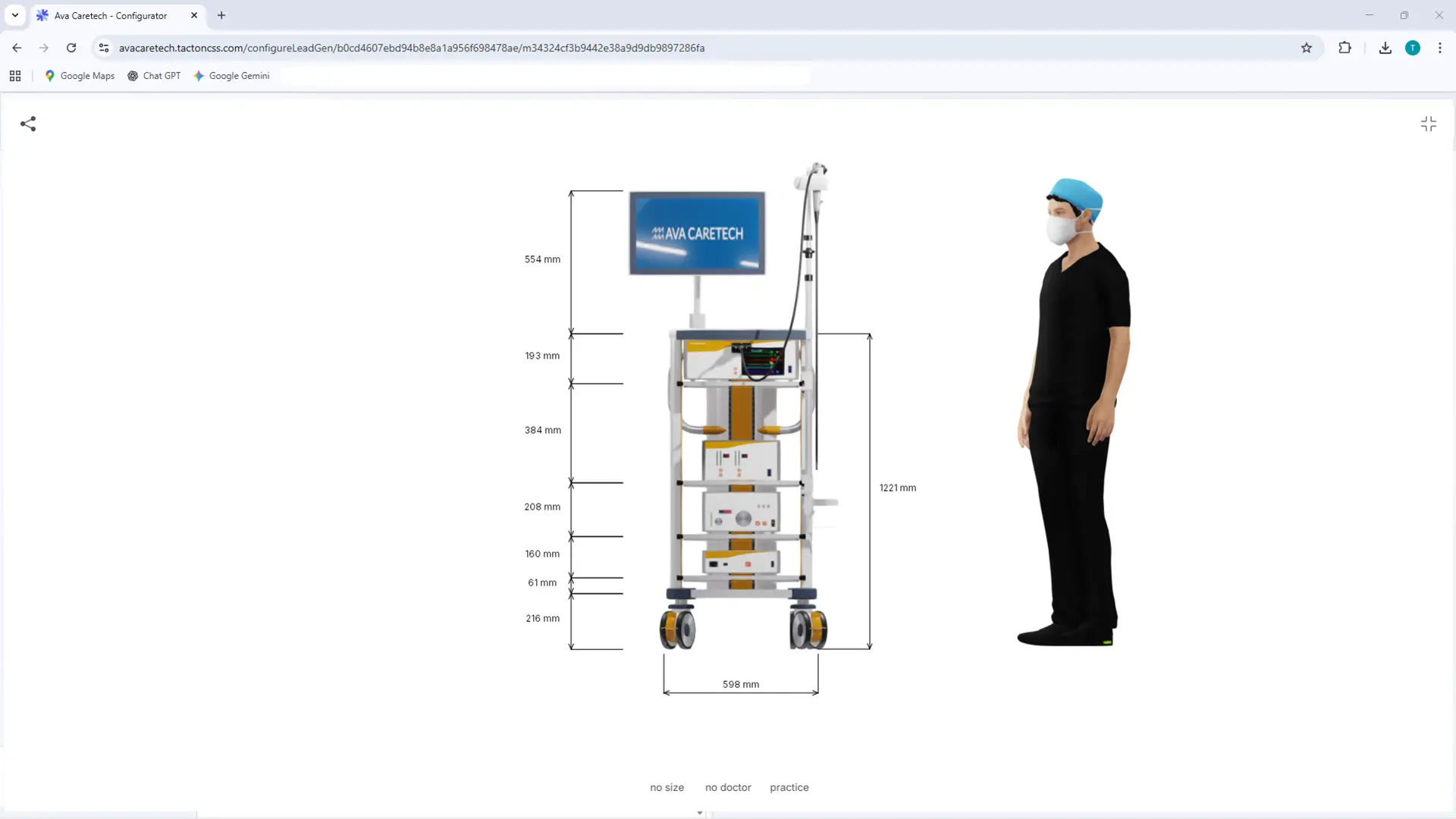
Tacton CPQ
The constraint-based engine intuitively guides users to a technically sound solution. It significantly speeds up the quote generation process and ensures maximum price transparency through automated real-time calculations for the sales team.
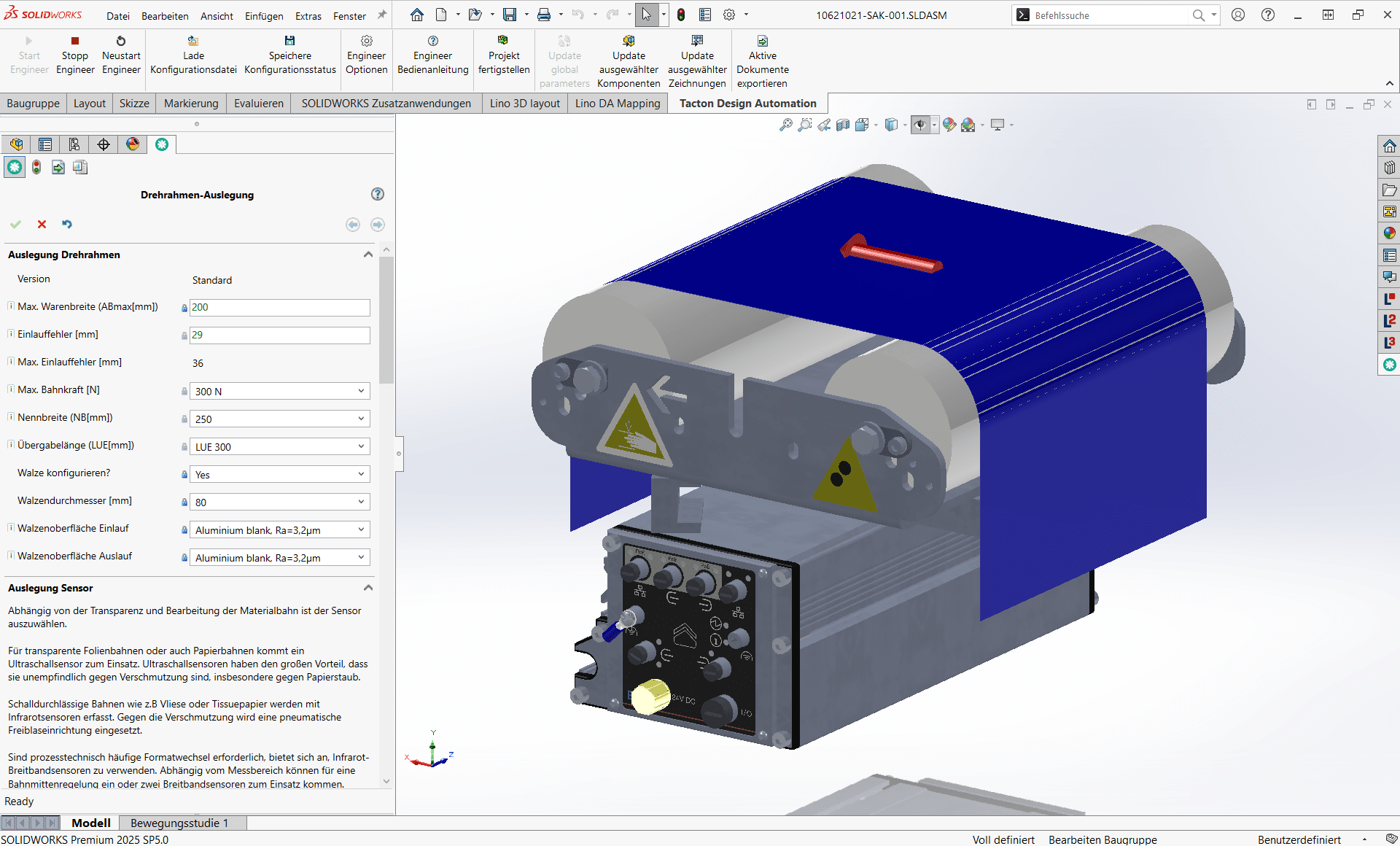
Tacton Design Automation
Transforms expert knowledge into intelligent rules to automatically generate complex 3D models, drawings, and bill of materials—saving up to 90% of engineering time.
Relevant Processes for the Heating Technology Sector
The digital engineering processes supported by Lino combine system integration, configuration and automation into an end-to-end value chain – from initial customer contact through to the finished installation.
Design Automation for Rapid Product Development
Optimize your design process with Design Automation and CAD automation. Product rules automatically generate 3D CAD models, 2D drawings, and bills of materials. This accelerates engineering processes, reduces errors, and significantly decreases routine engineering tasks.
Product Configuration for Individual Customer Solutions
Master product variety with a product configurator and CPQ system. Using rule-based variant configuration and guided selling, sales teams, partners, and customers create technically valid product variants, quotes, and configuration data – directly integrated into CAD and ERP systems.
System Integration for a Seamless Corporate IT Landscape
Connect your IT systems into a continuous data chain. Through system integration in mechanical engineering, CAD, ERP, CRM, and PDM/PLM systems are seamlessly linked. This creates a consistent digital thread along the entire product lifecycle.
Process Automation for Seamless Digital Workflows in Mechanical Engineering
Workflow and process automation connects engineering systems into seamless digital workflows. Automated workflows handle recurring tasks, reduce manual steps, and ensure consistent data between CAD, PDM, ERP, and CRM.
Generating Technical Drawings Automatically
Create technical drawings automatically from 3D CAD models. Drawing automation generates standards-compliant manufacturing documentation, automatically adjusts layouts, and reduces manual rework after model changes.
Together we analyse your existing workflows and identify concrete potential for more efficient, digital processes – hands-on, structured and with a clear focus on measurable benefit.
- Analysis of your engineering and sales processes
- Identification of optimisation potential
- A clear roadmap for your digital transformation
Come see for yourself

Frequently Asked Questions about Heating systems
The FAQs answer questions about the heating technology, furnaces, and burners industry in the context of the Lino portfolio.
Find answers about performance-based sizing, standards-compliant configuration, and automated documentation for industrial burners, furnaces, and electric heating systems. Learn how Tacton CPQ automatically checks BImSchV emission limits and ATEX requirements, how Tacton Design Automation generates 3D models with flame tube, ignition electrode, and control equipment mounting in hours rather than weeks, and how Lino Hub assembles CE declarations of conformity, risk assessments, and emission certificates at the click of a button – for 55% faster quotations and 100% standards-compliant documentation.
How does Lino Hub seamlessly connect the configuration process for heating technology with PDM, ERP, and manufacturing?
Lino Hub serves as the central data backbone between Tacton CPQ, Tacton Design Automation, the CAD system, the PDM/PLM system, and the ERP. After order confirmation, Lino Hub automatically transfers the complete bill of materials – burner head, flame tube, gas control train, ignition equipment, control components, standard parts, and purchased parts – to the ERP, validates part number consistency, and triggers the production order. Technical drawings, 3D models, and the complete documentation package are versioned and stored in the PDM/PLM system. Manufacturers report that this seamless system integration significantly reduces processing times while simultaneously delivering a massive improvement in data quality across sales and manufacturing – as demonstrated by GC-heat, where Tacton CPQ and Software Made by Lino together delivered a measurable leap in quality and efficiency.
How does the Lino AI Agent support sales in technical consultation for heating systems and burners?
The technical complexity of heating systems – fuel characteristics, process atmospheres, installation conditions, and regulatory requirements – demands intensive coordination between sales and engineering. The Lino AI Agent can be integrated into the configuration process to actively support sales staff in complex sizing questions: it analyzes customer requirements, suggests the appropriate power class and design variant, explains emission limits and ATEX requirements in context, and helps translate customer inquiries precisely into configuration parameters. This makes deep specialist knowledge scalable – without requiring a sizing engineer to intervene manually for every inquiry.
How does Lino automate the creation of CE declarations of conformity and documentation packages for heating technology systems?
Lino Hub and Lino Automate handle the fully automated assembly of the documentation package for every configured and delivered system. Since all relevant data – applied standards, emission class, ATEX category, pressure equipment, installed safety devices – is already structured within the configuration logic, the system automatically generates: the CE declaration of conformity with the correct applicable directives, the system-specific risk assessment under the Machinery Directive, ATEX zone classification and explosion protection evidence, emission records from the BImSchV calculations, and the variant-specific operating manual. All documents are versioned and stored in the PDM/PLM system, linked to the order in the ERP – audit-ready, complete, and without manual assembly effort.
How does Tacton Design Automation automatically generate 3D CAD models for configured industrial burners and heating systems?
Once a burner or heating system is configured in Tacton CPQ, Lino Hub transfers the parameters to Tacton Design Automation. Design Automation then fully automatically generates the parametric 3D CAD model: burner head in the configured power class, flame tube with correct diameter and length, ignition electrode, UV sensor, gas control train, and control equipment mounting with all installation and connection dimensions. For electric heating systems, the number and arrangement of heating elements, wiring diagram, and protective enclosure are generated automatically. What previously required days to weeks of manual engineering work is completed in hours – with up to 90% time savings and up to 40% less engineering effort for standard configurations.
How does Tacton CPQ ensure ATEX and CE compliance when configuring industrial burners and furnaces?
ATEX requirements for potentially explosive atmospheres, CE marking under the Machinery Directive and EN 746 for industrial furnaces, and the Pressure Equipment Directive for pressure-bearing components are stored directly as constraints in Tacton CPQ. The system automatically identifies whether the burner installation requires an ATEX zone classification and suggests the correct equipment category (II2G, II3G) along with the necessary explosion-protected versions for ignition equipment, valves, and controls. Non-compliant combinations – such as a standard ignition transformer in a Zone 1 environment – are excluded by design. The result is 100% standards-compliant configurations that require no time-consuming retrospective checks during CE documentation.
How does Tacton CPQ integrate the thermal sizing of industrial burners into the configuration process?
Tacton CPQ can execute the sizing logic for industrial burners directly as part of the configuration process. Sales staff enter heating output, fuel type, fuel composition, process temperature, flame geometry, and control requirements. The system automatically calculates the required modulation range, determines burner head size and flame tube diameter, and assigns UV sensor, ignition electrode, and gas control train. Simultaneously, Tacton CPQ checks compliance with BImSchV emission limits for NOx, CO, and particulates, as well as TA Luft requirements, and blocks in real time all combinations that exceed regulatory emission thresholds. The expert knowledge of sizing specialists – previously concentrated in a few individuals – is thus transformed into scalable, error-free configuration logic.