


Lino Hub
CAD Automation
Engineering automation as a bridge between sales and manufacturing.
When product inquiries in sales automatically become CAD data, the order process gains speed and your engineering team gains valuable time for special requests and new developments. Lino Hub CAD Automation automates the creation of models, drawings and bills of materials and ensures a continuous data flow through to production. The result: shorter lead times, lower error-related costs, higher quotation capacity and relieved design teams.

Automate your design process and transform technical expertise into digital performance.
In the modern manufacturing industry, time is the most valuable resource. With Lino Hub CAD Automation, you gain a powerful software module within the Lino Hub integration platform. Product data from parametric CAD models is centrally managed and made available to all stakeholders in sales and manufacturing throughout the order process.
The Lino Hub Engineer CAD add-in displays the configuration menu directly within the CAD system. There, users can select product properties and options and trigger data generation directly from the CAD system. The software’s single-window integration thus enables designers to work intuitively within their familiar environment and system landscape.
High-maintenance Excel and design spreadsheets are now a thing of the past. This ensures that all stakeholders use the same data source and prevents misunderstandings between different departments. Lino Hub CAD Automation thus generates complete design data from a product configuration at the click of a button.
Seamless system integration for end-to-end processes
The true strength of CAD automation in Lino Hub lies in its role as middleware. It “translates” configuration results into CAD parameters. The generation of configuration-specific CAD data can be triggered both directly within the CAD system and from third-party systems and web applications. Through intelligent interfaces, Lino Hub enables bidirectional data exchange with PDM, PLM, and ERP systems, thereby providing efficient CAD integration. Even the subsequent generation of machine codes for CAM programming can be seamlessly integrated. This creates a digital and end-to-end order process, from the initial customer inquiry in sales to the manufacturing of the machine on the production floor.
Seamlessly connect sales, engineering, and manufacturing.
In the modern manufacturing industry, speed and data quality are key to gaining a competitive advantage and, consequently, driving revenue. Lino Hub is the central integration platform that transforms your existing system landscape into a seamless, digital process chain. As intelligent middleware, Lino Hub bridges the gap between CPQ solutions, CAD automation, ERP, and PDM systems. As a web-based system, Lino Hub can be operated both on-premises and via cloud hosting.
Videos on the Lino Hub Integration Platform: Engineering Automation at a Glance
Benefits of Lino Hub CAD Automation
Make your design the driving force behind your success – with Lino® Hub CAD Automation.
The seamless integration of sales, design, and manufacturing ensures that technical data is created and processed without any data gaps. Automated CAD processes improve data quality, speed up order processing, and make growth more predictable.
See for yourself, using your specific use case, how complex processes are simplified, systems are integrated and automation delivers measurable results.
- Practical demo with realistic use cases
- The next step for your digital transformation project
- Measurable benefits and ROI in record time

Lino Hub Platform
Additional modules for end-to-end automation
The Lino Hub has a modular design and scales to meet your needs. The following modules
specifically enhance CAD automation with visualization, product planning, and layout capabilities—
seamlessly integrated into a central platform for end-to-end, automated processes.
3D Web

Core

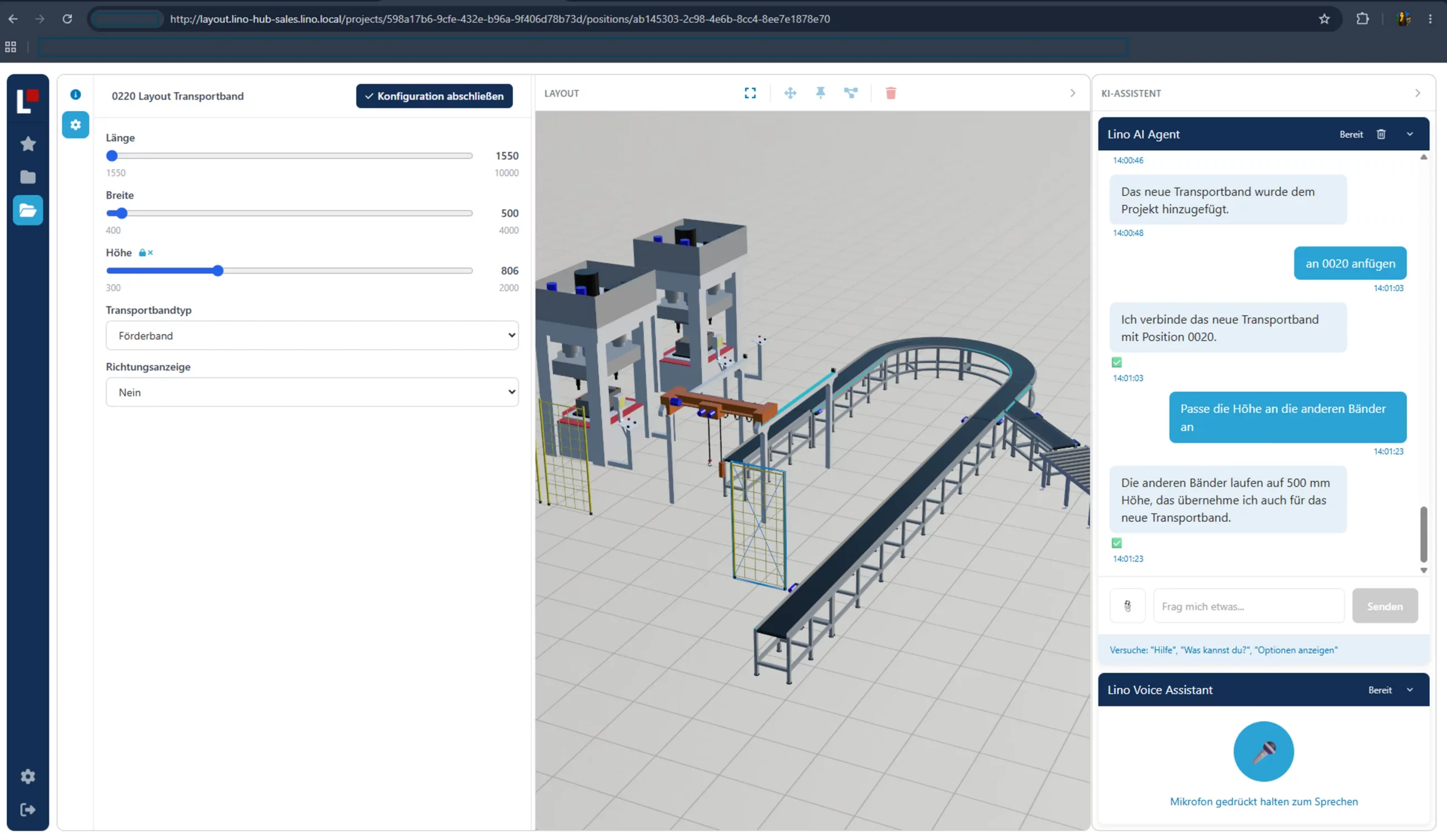
3D Layout
Experience Product Configuration Firsthand
The following application demos show the Lino Hub in real-world use for sales and product configuration.
All examples are based on CAD data generation using Cosling Configurator in conjunction with the parametric 3D web visualization provided by Lino 3D web. True parametric CAD models enable the visualization of all variants during the configuration process – even for complex products.

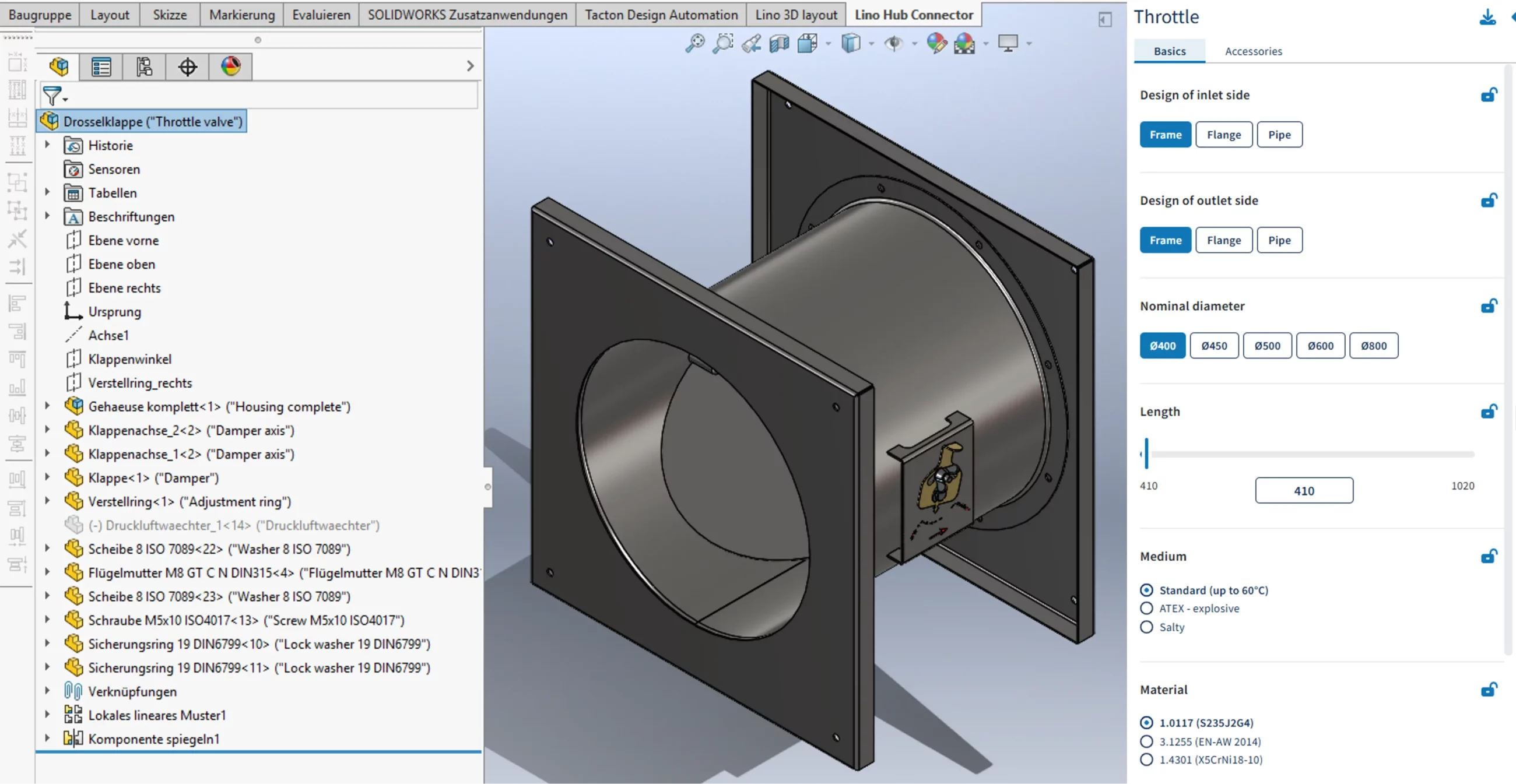
Configure the throttle valve
This demo demonstrates the configuration of an industrial butterfly valve with real-time 3D visualization and automatic CAD data generation. All variants are displayed directly on the web and form the technical basis for downstream engineering and manufacturing processes.

Configure your pellet heating system interactively
In this demo, a pellet heating system is configured using rules and visualized parametrically in 3D. Changes to the configuration are immediately visible and are directly incorporated into the automated generation of CAD data—ideal for consulting and sales.

Hinged door configuration with CAD automation
The demo shows the configuration of a revolving door with a wide range of product variants and a direct 3D visualization in the browser. The underlying CAD models are generated automatically, ensuring consistent processing in the engineering department.
Customer Success Stories
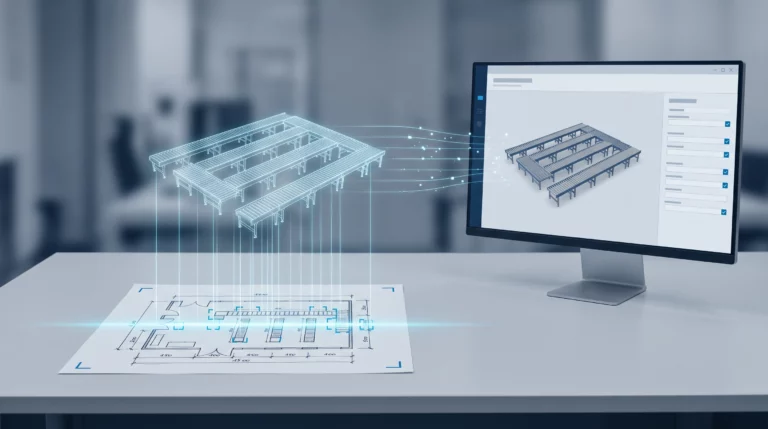
Engineering AI: Why Customer Requirements No Longer Need to Be Retyped
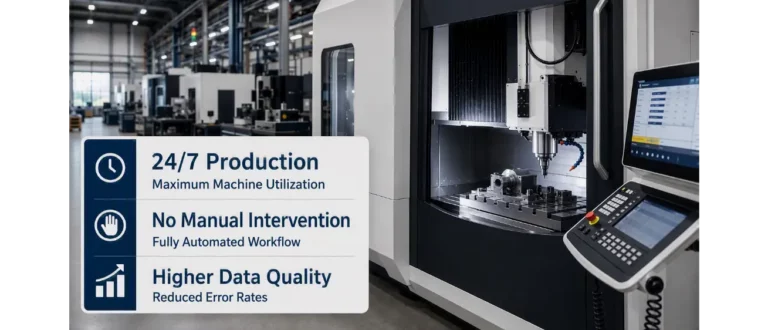
CAM Programming: Why No One Will Do It by Hand Anymore in the Future

Tyrolit Group Achieves 24/7 Production with Lino® Hub
Simply integrate. Intelligently automate.
Digital engineering processes for mechanical and plant engineering: Automate design, product configuration, and workflows; seamlessly integrate CAD, PDM, and ERP; and accelerate sales, planning, and manufacturing—efficiently, error-free, and with future-proof connectivity.
Frequently Asked Questions
Knowledge base on variant design and automated document generation.
This FAQ section explains how CAD models, drawings, and bills of materials are automatically generated from configurations.
Learn how to reduce engineering effort and significantly shorten lead times for products with many variants.
What is Lino Hub CAD Automation?
Lino Hub CAD Automation uses the central Hub platform to integrate CAD generation and automation into the configuration process. Parameterized CAD models automatically create new variants and production-relevant outputs such as drawings and bills of materials.
How does Lino Hub CAD Automation accelerate the engineering process?
By automating recurring tasks – such as model generation and derivation of production-relevant data – CAD automation significantly reduces manual work and shortens engineering processes.
How does Lino Hub CAD Automation reduce manual design work?
Lino Hub CAD Automation automates recurring CAD tasks such as model generation, drawing derivation, and bill-of-materials creation. Based on defined product rules, parameterized CAD models are generated automatically, including manufacturing-ready documents. This eliminates manual adjustments for variants or special designs. Design engineers gain time for complex development tasks while standard processes run reliably and error-free in the background.
Can Lino Hub CAD Automation generate variants automatically?
Yes. The solution is specifically designed for highly configurable products in mechanical and plant engineering. After configuration, the system automatically creates all associated CAD models, drawings, and production-relevant data. Changes to parameters lead directly to updated models without engineers having to remodel every detail. This enables customer-specific variants to be implemented quickly, consistently, and at scale.
Does Lino Hub CAD Automation support different CAD formats?
Lino Hub supports automated generation of native CAD data and neutral exchange formats such as STEP and IGES, which can be used for approval processes, manufacturing, or data exchange with external partners.
How does Lino Hub CAD Automation improve data quality?
Automated processes minimize manual errors and ensure that CAD outputs are consistent, complete, and ready for immediate use – for example in design, manufacturing, or quotation documents.
How much time can be saved with Lino Hub CAD Automation?
With Lino Hub CAD Automation, up to 70 percent of design effort can be saved. The exact time savings depend on the product portfolio and the range of variants. Automatic model generation, drawing derivation, and bill-of-materials creation remove manual routine tasks. Especially for customer-specific machines or series with high variant diversity, lead times in the order process are significantly reduced. This lowers costs, speeds up quotation and project phases, and increases scalability as the business grows.
For which companies is CAD automation particularly useful?
Lino Hub CAD Automation is particularly well suited for companies with complex and/or highly configurable products, such as those in mechanical and plant engineering. Wherever recurring CAD tasks consume time and resources, CAD automation delivers clear added value and helps companies secure their market share.