


Tacton CPQ Integration
Seamlessly Integrate Systems and Enable End-to-End Processes
With Tacton CPQ Integrations, you can seamlessly connect your entire system landscape – from CRM and ERP to PLM and PIM. Data flows automatically between Sales, Engineering and backend systems, eliminating media discontinuities and manual effort.
The result: consistent data, accelerated processes and a fully connected digital value chain.
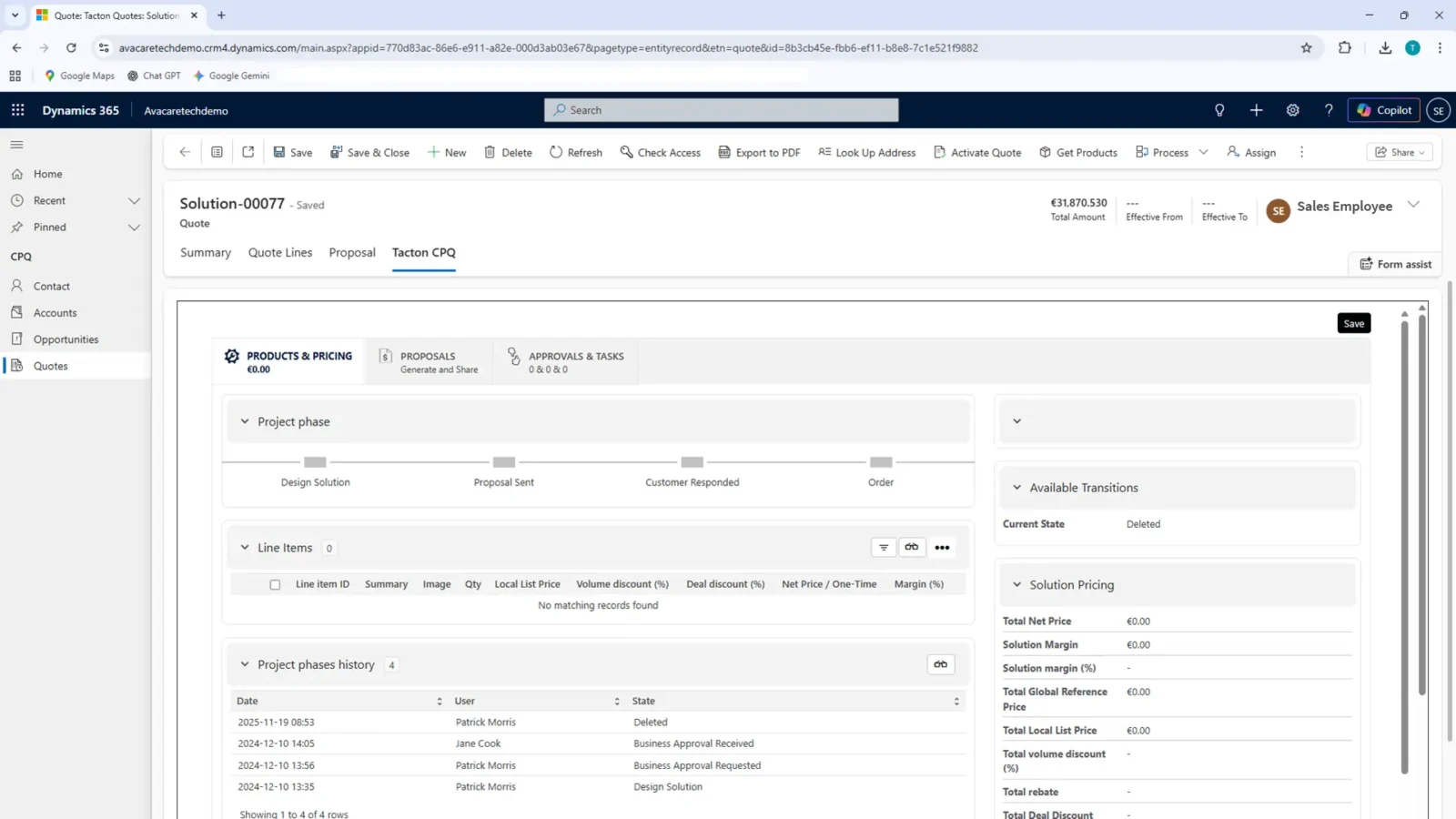
Seamless Data Exchange Between CRM, ERP and PLM –
For a Smooth Order Process
Tacton CPQ integrations act as the central nervous system of your IT landscape. A CPQ system only reaches its full potential when it communicates flawlessly with existing platforms such as Salesforce, Microsoft Dynamics, SAP or Oracle. This ensures that customer data and product information – including pricing and material master data – remain consistent across all systems.

Simply and without obligation, schedule a meeting for a consultation and get to know Tacton CPQ.
Break Down Data Silos
With integrated processes, won deals are automatically transferred to ERP for production planning. All customer information can be accessed directly from the CRM for configuration.
By leveraging modern APIs and Lino’s middleware expertise, manual data entry becomes obsolete – effectively reducing errors to zero.
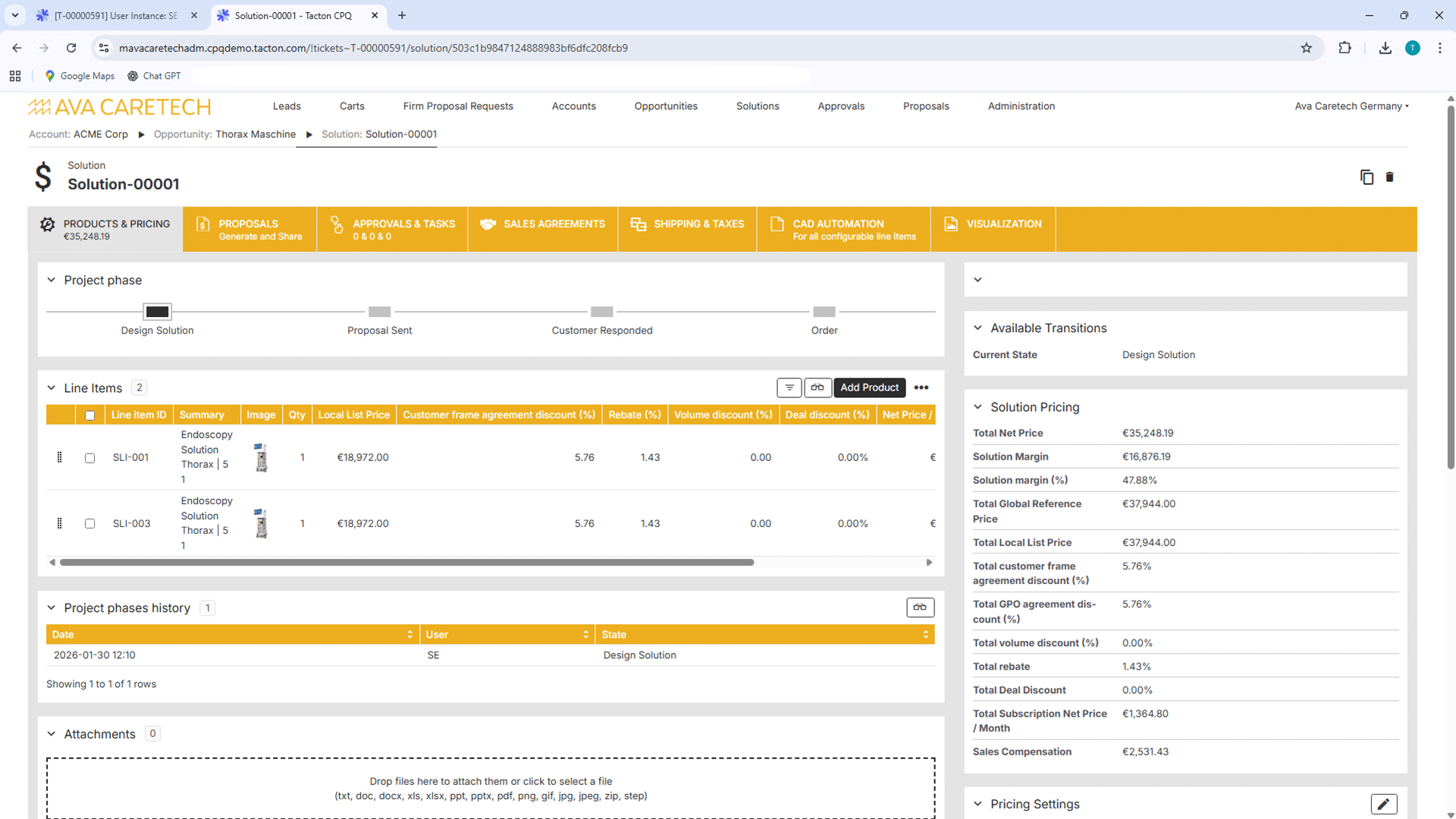
Key Benefits of Tacton CPQ Integration
Boost Your Sales Efficiency and Customer Satisfaction –
with Tacton CPQ.
Webinars
Register now for our free webinar or contact an expert for a personalized consultation.
Our webinars are intended exclusively for companies within our defined target audience.
Tacton CPQ Modules
Enhancements to Tacton CPQ for end-to-end sales and engineering processes.
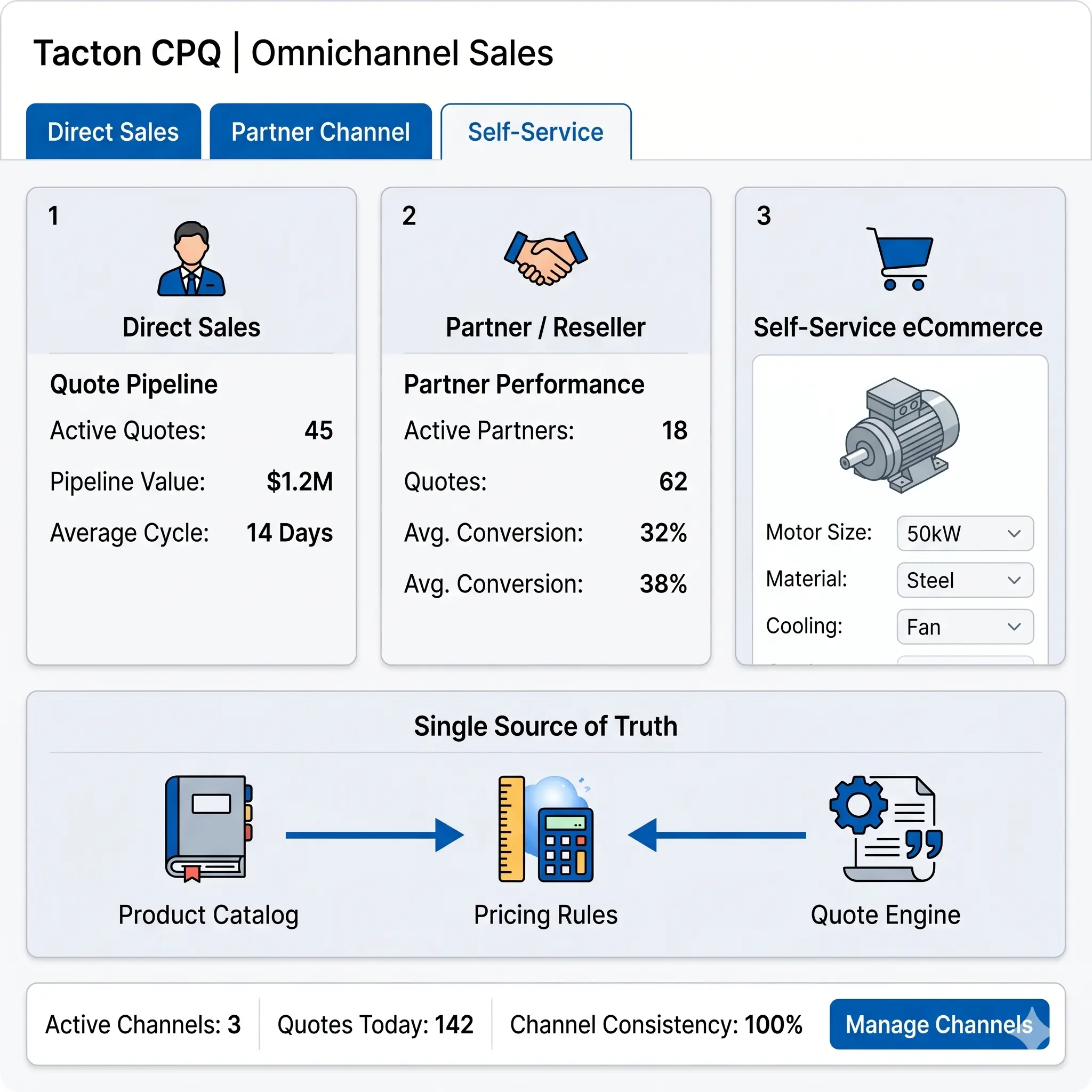
The modules for Tacton CPQ expand your configuration platform with features for CAD automation, visualization, integration, analysis, multi-channel sales, and the carbon footprint of your product configuration. This enables end-to-end processes spanning sales, engineering, and manufacturing – efficient, scalable, and secure.
CAD Automation

Visual Configuration

Embeddable Self Service

Analytics

Omnichannel Sales
Environmental Footprint

Platform

See for yourself, using your specific use case, how complex processes are simplified, systems are integrated and automation delivers measurable results.
- Practical demo with realistic use cases
- The next step for your digital transformation project
- Measurable benefits and ROI in record time

Frequently Asked Questions
Knowledge base on ERP, CRM and CAD integration.
This section covers the integration of CPQ solutions into existing IT environments.
The aim is to ensure a consistent data foundation from initial contact through to production.
What is the Tacton CPQ Integration module?
This module seamlessly connects Tacton CPQ with your existing IT systems such as CRM, ERP, or PLM. It enables automated data exchange, prevents isolated data silos, and thereby creates a seamless, error-free quote-to-cash process.
Which CRM systems are supported as standard?
Tacton offers certified standard connectors for leading CRM platforms like Salesforce, Microsoft Dynamics 365, and SAP Sales Cloud. Sales representatives can thus use Tacton directly from their familiar CRM environment without having to switch between different programs.
How does the connection to an ERP system work?
The ERP integration synchronizes material masters and prices. After a successful deal, Tacton automatically transfers the configured bill of materials (BOM), prices, and item data to ERP systems like SAP to directly trigger production and invoicing.
Does Tacton offer an open API for custom connections?
Yes, Tacton follows a consistent “API-first” approach. Via a modern, open REST API, industry-specific custom software, e-commerce platforms, or legacy systems can also be connected securely and flexibly. As a result, the system fits into any IT landscape.
What is the advantage of integration (single source of truth)?
Integration ensures that data only needs to be maintained once in a central location. CRM, ERP, and CPQ all access the same up-to-date information at all times. This eliminates manual duplicate data entry, reduces potential sources of error, and ensures that all departments work consistently.
How are product and master data synchronized?
Master data such as item numbers, customer information, or exchange rates is automatically imported into Tacton from the leading ERP or PLM system—either in real time or through batch processing. This ensures that sales teams always configure using current and accurate data.
Does Tacton also support single sign-on (SSO)?
Yes, Tacton CPQ Integration supports common single sign-on (SSO) standards such as SAML 2.0. Users simply log in with their existing corporate credentials. This increases security and significantly simplifies user management for IT.
Are integrations affected by software updates?
No. Since Tacton CPQ is a modern cloud solution, its standard integrations and APIs are backward compatible. When Tacton or connected cloud systems (such as Salesforce) are updated, the interfaces remain stable and fully functional—without triggering costly maintenance projects.
How secure is data exchange between the systems?
Data exchange is carried out using a high level of encryption and complies with the strictest corporate and compliance standards, including GDPR. Sensitive product, pricing, and customer data is comprehensively protected at all times during transmission between Tacton and your connected systems.
How long does it take to set up the interfaces?
Thanks to ready-made standard connectors (out of the box) for common CRM and ERP systems, implementation time is significantly reduced. The actual customization to company-specific data fields (mapping) is usually completed within a few weeks, rather than taking months as with custom-developed integrations.
Latest News
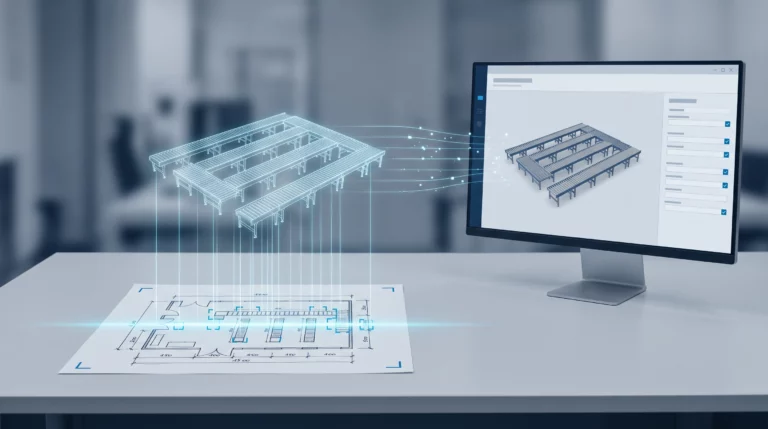
Engineering AI: Why Customer Requirements No Longer Need to Be Retyped
CAM Programming: Why No One Will Do It by Hand Anymore in the Future
