


Tacton CPQ Environmental Footprint Configuration
Factor Sustainability into Every Configuration – Turn Impact into a Sales Advantage
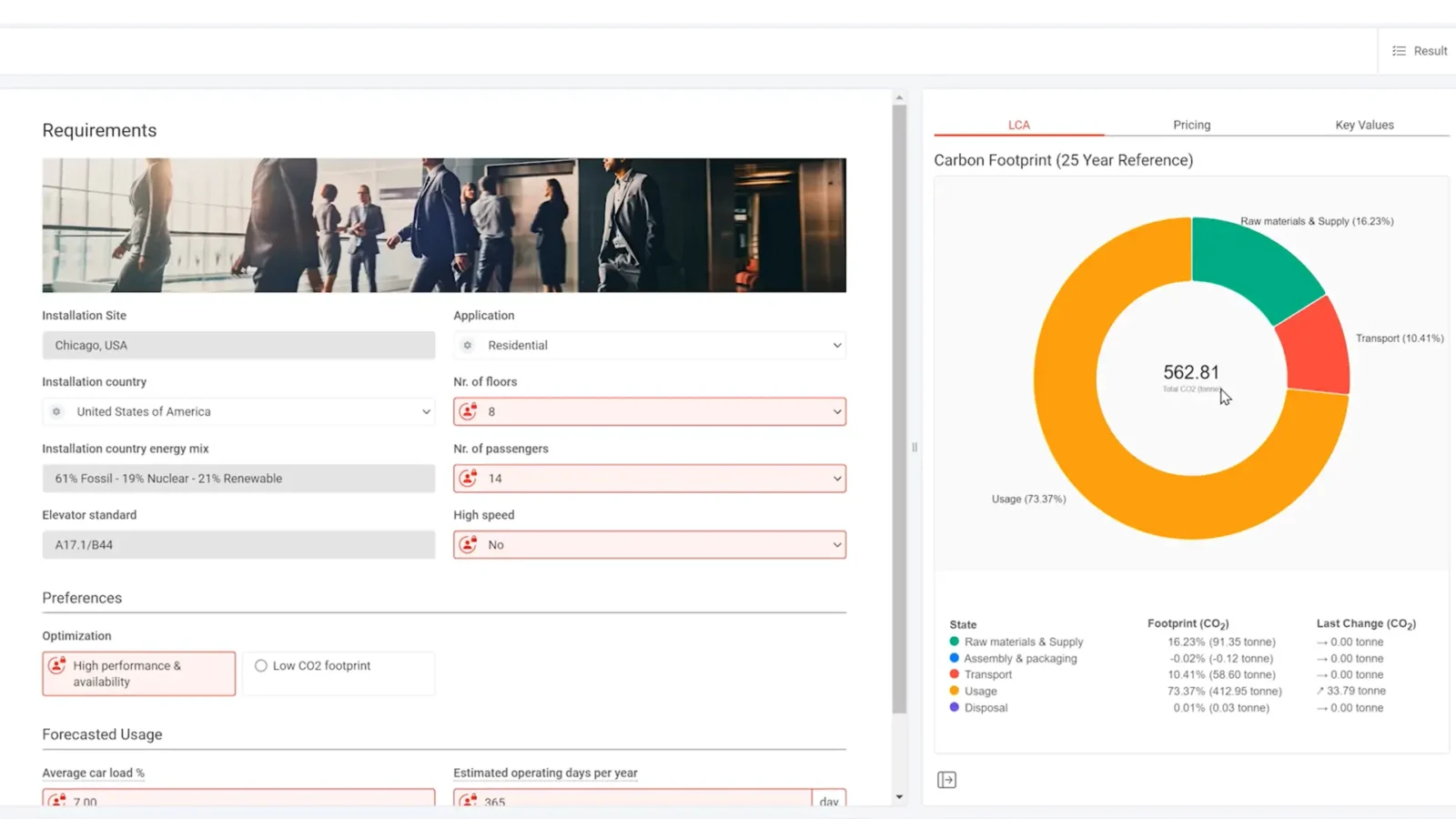
With Tacton CPQ Environmental Footprint Configuration, you can calculate the environmental footprint of configured products in real time.
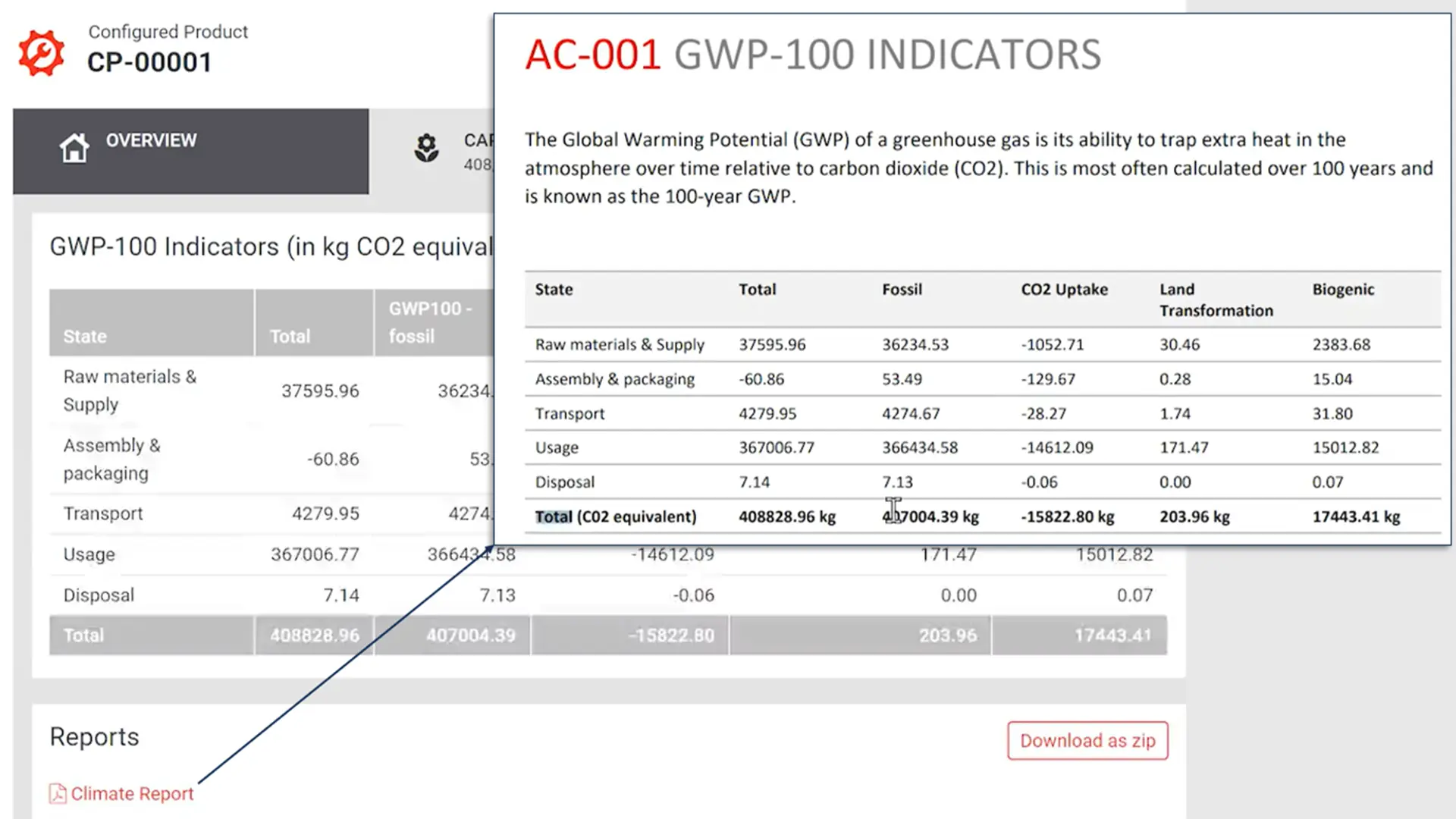
Based on life cycle data, emissions are displayed directly within the configurator, enabling customers to compare and optimise sustainable variants with full transparency.
Configure with Confidence –
Real-Time Transparency of the Carbon Footprint
Sustainability is becoming a key differentiator in manufacturing. The Environmental Footprint Configuration module allows you to visualise the environmental impact of each product variant during configuration. Customers immediately see how choices such as motors or materials influence CO₂ emissions and energy consumption. Every configuration delivers a precise, data-driven view of its environmental footprint.
Simply and without obligation, schedule a meeting for a consultation and get to know Tacton CPQ.
Compliance and Customer Value
The Environmental Footprint Configuration module not only supports compliance with regulatory requirements – such as the Digital Product Passport – but also positions your business as a responsible and forward-thinking partner.
Alongside price and performance, the environmental footprint becomes a decisive factor in the sales conversation. This enables you to connect sales, sustainability and compliance, increase transparency and support informed, climate-conscious purchasing decisions.
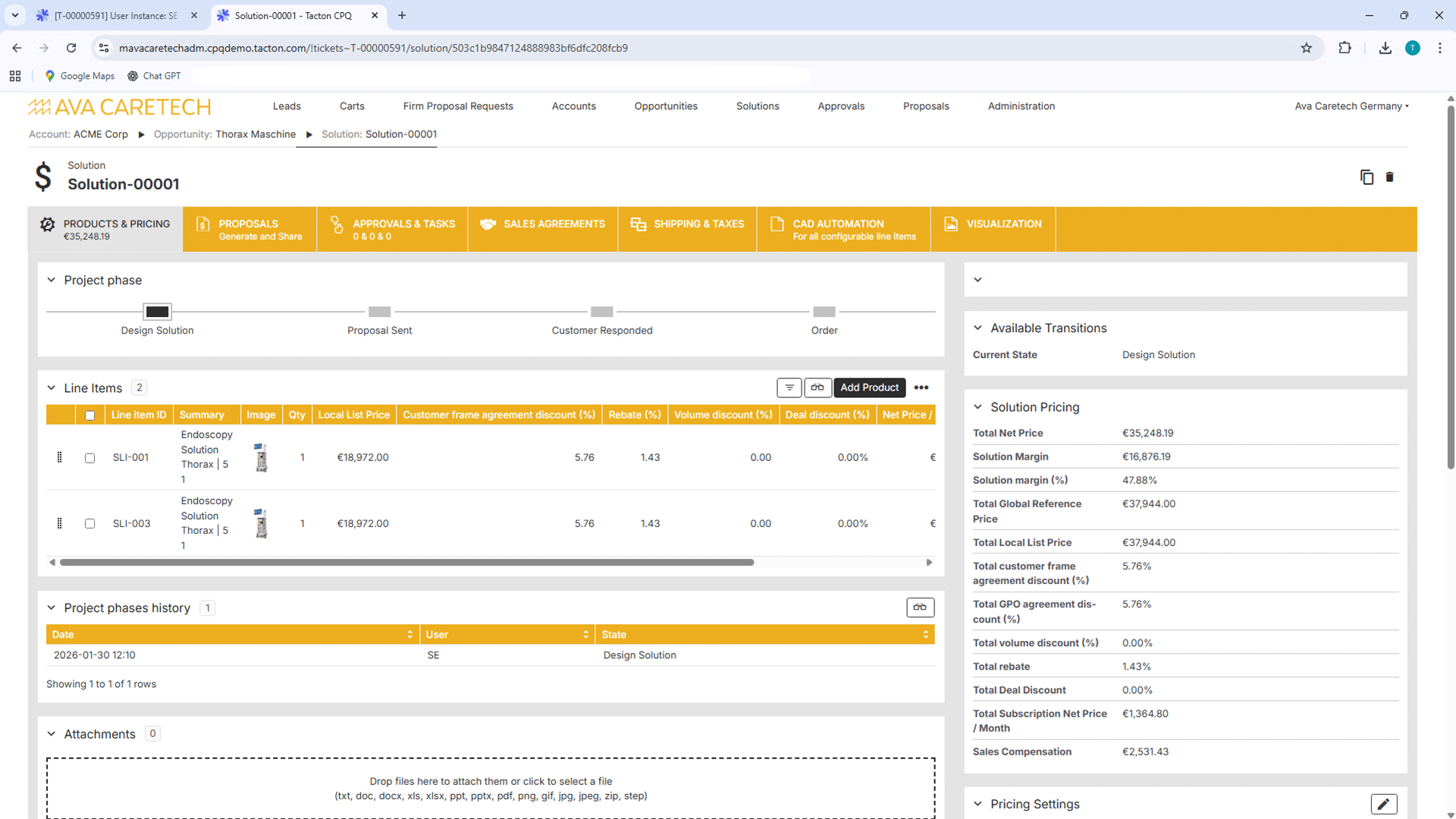
Key Benefits of Tacton CPQ Environmental Footprint Configuration
Boost Your Sales Efficiency and Customer Satisfaction –
with Tacton CPQ.
Webinars
Register now for our free webinar or contact an expert for a personalized consultation.
Our webinars are intended exclusively for companies within our defined target audience.
Tacton CPQ Modules
Enhancements to Tacton CPQ for end-to-end sales and engineering processes.
The modules for Tacton CPQ expand your configuration platform with features for CAD automation, visualization, integration, analysis, multi-channel sales, and the carbon footprint of your product configuration. This enables end-to-end processes spanning sales, engineering, and manufacturing – efficient, scalable, and secure.
CAD Automation

Visual Configuration

Integration

Analytics

Omnichannel Sales
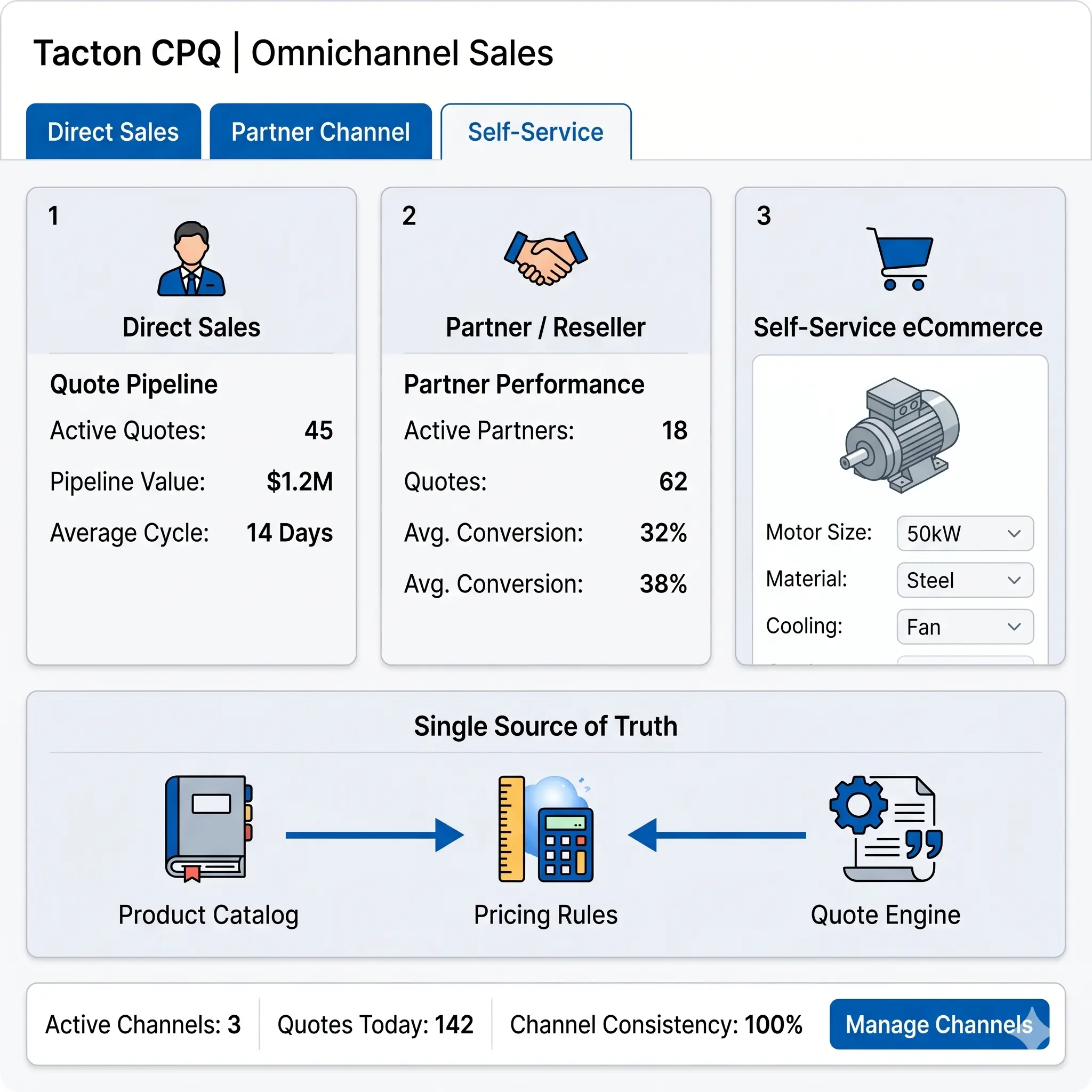
Embeddable Self Service

Platform

See for yourself, using your specific use case, how complex processes are simplified, systems are integrated and automation delivers measurable results.
- Practical demo with realistic use cases
- The next step for your digital transformation project
- Measurable benefits and ROI in record time
Frequently Asked Questions
Knowledge base on carbon footprinting, ESG transparency, and sustainable product selection.
Here, we answer questions about integrating environmental metrics into the configuration process.
Learn how environmental impacts can be identified as early as the proposal phase and how this supports sustainable decision-making.
Can different configurations be compared?
Yes. Sales representatives or customers can directly contrast different product variants. This allows the trade-off between price, performance, and ecological footprint to be transparently evaluated to find the optimal solution.
What is the Environmental Footprint Configuration?
This module calculates and visualizes the environmental impacts (such as CO2 emissions) of a product directly during the configuration in the sales process. It enables manufacturers and customers to make more sustainable purchasing decisions.
Where does the environmental data for the calculation come from?
The data is based on your company’s Life Cycle Assessments (LCA) or on standardized emission factors. These environmental metrics are linked to the specific components, materials, and production steps in the CPQ system.
How does the module help in B2B sales?
Sustainability has become a key decision criterion in the B2B sector. With this module, sales teams can actively offer CO2-optimized variants, representing a clear competitive advantage and helping customers achieve their own climate goals.
Does this work with needs-based configuration?
Yes, absolutely. Just like price or performance, customers can define “sustainability” or “lowest CO2 emissions” as their primary goal. Tacton’s AI-based engine then automatically searches for the most environmentally friendly, technically feasible product variant.
Are the emission data shown in the quote?
Yes, the calculated environmental data can be integrated into the final quote document (PDF) as standard information. This creates transparency and immediately provides the customer with reliable figures for their own ESG reporting (e.g., Scope 3 emissions).
Does the module help with legal regulations?
The module supports companies in better meeting the requirements of stricter environmental directives like the Corporate Sustainability Reporting Directive (CSRD) or the Carbon Border Adjustment Mechanism (CBAM) by providing transparent emission data at the product level.
Can transport and operating phases also be considered?
Yes. Depending on the stored data, the footprint can be calculated not only for manufacturing (Cradle-to-Gate) but also for transport, expected service life (energy consumption during operation), and disposal.
Does the implementation require a separate IT project?
No, it is a seamlessly integrated function of the existing Tacton CPQ platform. If the basic configuration rules and the corresponding environmental metrics for the components are available, the function can be quickly integrated into the existing process.
Latest Posts
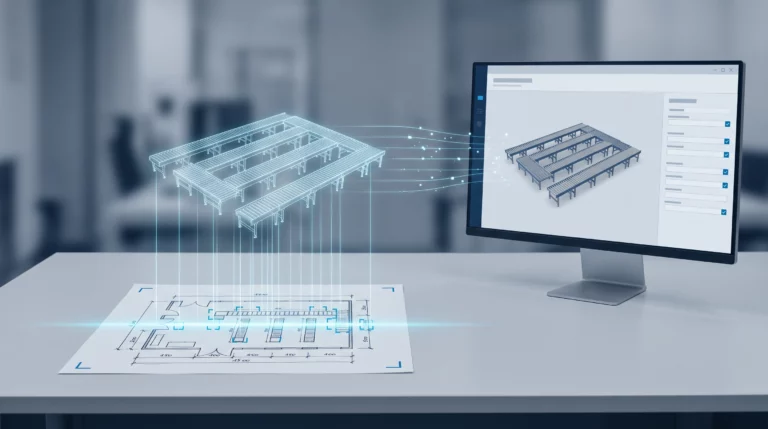
Engineering AI: Why Customer Requirements No Longer Need to Be Retyped
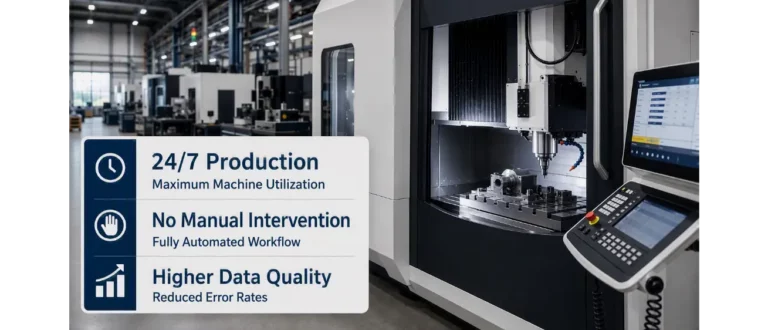
CAM Programming: Why No One Will Do It by Hand Anymore in the Future
